7 books on AI for Cyber Security [PDF]
Like
25
AI-based solutions are already being actively used in cybersecurity and their importance will only increase. Artificial intelligence is particularly good at collecting and analyzing vast amounts of data, extracting valuable insights and responding quickly. These capabilities significantly enhance an organization's ability to detect and respond to cyberattacks, minimizing the potential damage caused by hackers.
Many security solutions, such as SIEM or XDR, record thousands of events indicating potentially anomalous behavior. While the vast majority of these events are harmless, some are not and the risk of missing a potential cyberthreat can be enormous. AI helps identify truly important incidents. It also correlates seemingly unrelated activities with incidents that indicate a potential cyberthreat. AI helps reduce false positives and false negatives using advanced techniques such as pattern recognition, anomaly detection, context understanding and continuous learning.
Because generative AI understands natural language, security analysts don't need to know how to write queries to be more productive. This helps junior analysts perform more complex tasks. Furthermore, generative AI provides remediation instructions and other recommendations that help new team members quickly learn how to effectively act during cyberattacks.
However, AI shouldn't be considered a "silver bullet." Machine learning also has its drawbacks. If a neural network is trained on poor data, its results will be inaccurate. Therefore, SIEM alerts should be verified by SOC analysts. Generating too many false alarms can overload SOC specialists that is why in properly configured SIEM neural network should continually learn from their environment to minimize false positives.
Here are some PDF books on AI for Cyber Security:
1. AI-Driven Cyber Security: Navigating the Digital Frontier with Deep Learning
2024 by S. R. Jena, Prof. Dr. Dileep Kumar M.

Download PDF
2. AI Tools for Protecting and Preventing Sophisticated Cyber Attacks
2023 by Babulak, Eduard

This book consists of several articles on the use of AI for corporate cybersecurity. The article that interested me the most was about intrusion detection systems (IDS). It turns out that there are two main methods used for IDS: signature-based and anomaly-based. Almost all legacy intrusion detection systems are signature-based - they use rules to detect intrusions. However, for a large distributed organization, such IDS would require too many rules, which can be expensive and unreliable. If the signatures are not well defined, attackers can bypass the defenses and penetrate the system. To solve these problems, anomaly detection-based systems have been proposed - they do not require human intervention because rely on AI and trained models to improve anomaly recognition with an acceptable cost and reliability.
Download PDF
3. Artificial Intelligence for Cybersecurity
2022 by Mark Stamp, Corrado Aaron Visaggio, Francesco Mercaldo, Fabio Di Troia

Download PDF
4. AI and Machine Learning for Network and Security Management
2022 by Yulei Wu, Jingguo Ge, Tong Li

Download PDF
5. AI-Enabled Threat Detection and Security Analysis for Industrial IoT
2021 by Hadis Karimipour, Farnaz Derakhshan

Download PDF
6. Artificial Intelligence in Cyber Security: Impact and Implications: Security Challenges, Technical and Ethical Issues, Forensic Investigative Challenges
2021 by Reza Montasari, Hamid Jahankhani

Download PDF
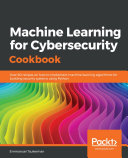
7. Machine Learning for Cybersecurity Cookbook: Over 80 recipes on how to implement machine learning algorithms for building security systems using Python
2019 by Emmanuel Tsukerman
Download PDF
How to download PDF:
1. Install Gooreader
2. Enter Book ID to the search box and press Enter
3. Click "Download Book" icon and select PDF*
* - note that for yellow books only preview pages are downloaded
Many security solutions, such as SIEM or XDR, record thousands of events indicating potentially anomalous behavior. While the vast majority of these events are harmless, some are not and the risk of missing a potential cyberthreat can be enormous. AI helps identify truly important incidents. It also correlates seemingly unrelated activities with incidents that indicate a potential cyberthreat. AI helps reduce false positives and false negatives using advanced techniques such as pattern recognition, anomaly detection, context understanding and continuous learning.
Because generative AI understands natural language, security analysts don't need to know how to write queries to be more productive. This helps junior analysts perform more complex tasks. Furthermore, generative AI provides remediation instructions and other recommendations that help new team members quickly learn how to effectively act during cyberattacks.
However, AI shouldn't be considered a "silver bullet." Machine learning also has its drawbacks. If a neural network is trained on poor data, its results will be inaccurate. Therefore, SIEM alerts should be verified by SOC analysts. Generating too many false alarms can overload SOC specialists that is why in properly configured SIEM neural network should continually learn from their environment to minimize false positives.
Here are some PDF books on AI for Cyber Security:
1. AI-Driven Cyber Security: Navigating the Digital Frontier with Deep Learning
2024 by S. R. Jena, Prof. Dr. Dileep Kumar M.
Download PDF
2. AI Tools for Protecting and Preventing Sophisticated Cyber Attacks
2023 by Babulak, Eduard
This book consists of several articles on the use of AI for corporate cybersecurity. The article that interested me the most was about intrusion detection systems (IDS). It turns out that there are two main methods used for IDS: signature-based and anomaly-based. Almost all legacy intrusion detection systems are signature-based - they use rules to detect intrusions. However, for a large distributed organization, such IDS would require too many rules, which can be expensive and unreliable. If the signatures are not well defined, attackers can bypass the defenses and penetrate the system. To solve these problems, anomaly detection-based systems have been proposed - they do not require human intervention because rely on AI and trained models to improve anomaly recognition with an acceptable cost and reliability.
Download PDF
3. Artificial Intelligence for Cybersecurity
2022 by Mark Stamp, Corrado Aaron Visaggio, Francesco Mercaldo, Fabio Di Troia
Download PDF
4. AI and Machine Learning for Network and Security Management
2022 by Yulei Wu, Jingguo Ge, Tong Li
Download PDF
5. AI-Enabled Threat Detection and Security Analysis for Industrial IoT
2021 by Hadis Karimipour, Farnaz Derakhshan
Download PDF
6. Artificial Intelligence in Cyber Security: Impact and Implications: Security Challenges, Technical and Ethical Issues, Forensic Investigative Challenges
2021 by Reza Montasari, Hamid Jahankhani
Download PDF
7. Machine Learning for Cybersecurity Cookbook: Over 80 recipes on how to implement machine learning algorithms for building security systems using Python
2019 by Emmanuel Tsukerman
Download PDF
How to download PDF:
1. Install Gooreader
2. Enter Book ID to the search box and press Enter
3. Click "Download Book" icon and select PDF*
* - note that for yellow books only preview pages are downloaded