New and recently funded AI Startups
1

Country: China | Funding: CN¥50B
DeepSeek is specializing in the development of large-scale open-source language models. The company unexpectedly grew out of a Chinese hedge fund and disrupted the AI market with its technologies, which significantly reduced the cost of training and inference of LLM models. These technologies include Mixture of Experts - a fragmented model splitting into individual "experts" so that only a small portion of the model could be used for each task. Unlike traditional language models, which rely heavily on supervised fine-tuning, DeepSeek relies primarily on reinforcement learning. It also came up with the idea of using distilled data from OpenAI models for training. DeepSeek provides its online chatbot and an API for business. Its responses are often criticized due to Chinese censorship.
DeepSeek is specializing in the development of large-scale open-source language models. The company unexpectedly grew out of a Chinese hedge fund and disrupted the AI market with its technologies, which significantly reduced the cost of training and inference of LLM models. These technologies include Mixture of Experts - a fragmented model splitting into individual "experts" so that only a small portion of the model could be used for each task. Unlike traditional language models, which rely heavily on supervised fine-tuning, DeepSeek relies primarily on reinforcement learning. It also came up with the idea of using distilled data from OpenAI models for training. DeepSeek provides its online chatbot and an API for business. Its responses are often criticized due to Chinese censorship.
2

Country: Sweden | Funding: $1.4B
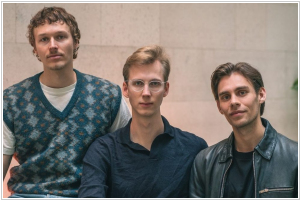
Legora is a collaborative AI that empowers lawyers by enabling them to review documents, conduct research, and draft legal materials. The company helps automate and assist with workflow tasks for legal professionals, as the industry moves beyond AI assistants to AI services that help them get work done.
Legora is a collaborative AI that empowers lawyers by enabling them to review documents, conduct research, and draft legal materials. The company helps automate and assist with workflow tasks for legal professionals, as the industry moves beyond AI assistants to AI services that help them get work done.
3

Country: USA | Funding: $44M
Zenzap develops AI chat app that aims to replace WhatsApp in the workplace. It's a private messenger with AI that wants to help companies communicate with their staff and arm them with their organization’s context while staying in line with IT and security rules. Zenzap offers usual chat features on its free tier, including group chats and direct messages, task management, calendar integration, and schedule management, as well as AI-powered voice chat and search.
Zenzap develops AI chat app that aims to replace WhatsApp in the workplace. It's a private messenger with AI that wants to help companies communicate with their staff and arm them with their organization’s context while staying in line with IT and security rules. Zenzap offers usual chat features on its free tier, including group chats and direct messages, task management, calendar integration, and schedule management, as well as AI-powered voice chat and search.
4
Country: USA | Funding: $393M
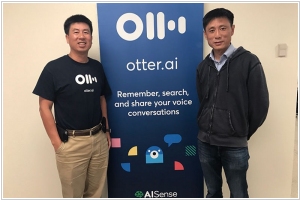
Otter.ai is an AI assistant for video meeting transcription, note-taking, searching and sharing recordings of meetings, lectures, and live streams. You can add Otter directly to a video conference or grant it access to recordings, and it will transcribe the entire conversation, capture highlights, and automate follow-up actions. Otter's AI-powered chat combines meetings and connected apps, instantly answering questions and helping you create follow-up actions, reports and content using LLM models like ChatGPT, Claude, and others via the MCP server. The assistant supports numerous integrations with tools like Slack, Zoom, Google Meet, Salesforce, Google Drive, and many others.
Otter.ai is an AI assistant for video meeting transcription, note-taking, searching and sharing recordings of meetings, lectures, and live streams. You can add Otter directly to a video conference or grant it access to recordings, and it will transcribe the entire conversation, capture highlights, and automate follow-up actions. Otter's AI-powered chat combines meetings and connected apps, instantly answering questions and helping you create follow-up actions, reports and content using LLM models like ChatGPT, Claude, and others via the MCP server. The assistant supports numerous integrations with tools like Slack, Zoom, Google Meet, Salesforce, Google Drive, and many others.
5

Country: Canada | Funding: $2.5B
Tenstorrent develops AI processors Tensix that feature precision, anchored in RISC-V’s open architecture, delivering specialized, silicon-proven solutions for both AI training and inference. Basing on these processors, the company also manufactures PCI boards for desktop computers, desktop workstations and servers for corporations and research institutes. They provide superior performance per dollar for developers who need to run, test and develop AI models, as well as port and develop libraries for high-performance computing (HPC). The company also offers own cloud service where these servers can be rented.
Tenstorrent develops AI processors Tensix that feature precision, anchored in RISC-V’s open architecture, delivering specialized, silicon-proven solutions for both AI training and inference. Basing on these processors, the company also manufactures PCI boards for desktop computers, desktop workstations and servers for corporations and research institutes. They provide superior performance per dollar for developers who need to run, test and develop AI models, as well as port and develop libraries for high-performance computing (HPC). The company also offers own cloud service where these servers can be rented.
6

Country: USA
SEOSorted is an AI SEO tool that researches keywords with live SERP data, analyses competitors, plans content, writes optimized articles and publishes them to WordPress, Webflow, Shopify and other CMS platforms. It adds internal links, schema, images, and metadata, then tracks clicks, impressions, rankings and conversions through Google Search Console and Analytics. Built for founders, startups and agencies, SEOSorted turns SEO research, publishing and performance tracking into one workflow.
SEOSorted is an AI SEO tool that researches keywords with live SERP data, analyses competitors, plans content, writes optimized articles and publishes them to WordPress, Webflow, Shopify and other CMS platforms. It adds internal links, schema, images, and metadata, then tracks clicks, impressions, rankings and conversions through Google Search Console and Analytics. Built for founders, startups and agencies, SEOSorted turns SEO research, publishing and performance tracking into one workflow.
7
Country: India | Funding: $78.2M
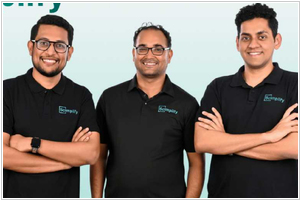
Scimplify develops chemical and critical material manufacturing processes and then transfers them to partner factories for commercial production. Its proprietary AI platform, Scinode, helps coordinate the work by identifying suitable production routes and manufacturing facilities, while tracking quality and regulatory requirements. The platform uses specialized AI agents for different functions, including research, manufacturing, and quality control
Scimplify develops chemical and critical material manufacturing processes and then transfers them to partner factories for commercial production. Its proprietary AI platform, Scinode, helps coordinate the work by identifying suitable production routes and manufacturing facilities, while tracking quality and regulatory requirements. The platform uses specialized AI agents for different functions, including research, manufacturing, and quality control
8
Country: USA | Funding: $55M
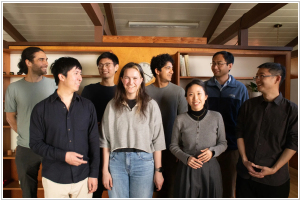
Elorian specializes in creating AI models that can handle a variety of data kinds simultaneously. Unlike most multimodal models that look at an image once, convert it to tokens, and then reason about it in text, Elorian's model Glimpse keeps going back to the source. Mid-reasoning, it can crop into a region, pull specific frames from a video, or run code to measure or compare what it’s looking at, a mechanism Elorian calls a “visual scratch space.” Think of someone pinching to zoom on a phone photo to double-check what they thought they saw.
Elorian specializes in creating AI models that can handle a variety of data kinds simultaneously. Unlike most multimodal models that look at an image once, convert it to tokens, and then reason about it in text, Elorian's model Glimpse keeps going back to the source. Mid-reasoning, it can crop into a region, pull specific frames from a video, or run code to measure or compare what it’s looking at, a mechanism Elorian calls a “visual scratch space.” Think of someone pinching to zoom on a phone photo to double-check what they thought they saw.
9

Country: UK | Funding: $24.6M
Unitary builds context-aware AI and multimodal machine learning approaches to analyze video content in context.
Unitary builds context-aware AI and multimodal machine learning approaches to analyze video content in context.
10
Country: Poland | Funding: $27M
Cosmose AI empowers oCommerce by synergizing offline and online for omnichannel and influence.
Cosmose AI empowers oCommerce by synergizing offline and online for omnichannel and influence.