4 books on Data Annotation [PDF]
Like
26
Data labeling/annotation is the process of adding tags to raw data to indicate to ML model the target attributes that it should learn to predict. For example, suppose a model needs to guess music genres. In this case, the training dataset would consist of many songs labeled as pop, jazz, rock and so on. Thus, labeled data highlights features (characteristics) to help the model identify patterns in historical data to make accurate predictions on new, relatively similar input data. The process of data labeling is one of the most important steps in preparing data for supervised machine learning.
However, tagging each data element is a difficult, time-consuming task that requires human annotators. In the full MLOps cycle data preparation (including annotation) takes up almost 80% of the project's time. Furthermore, to tag data in highly specialized niches like healthcare, you may need to hire experts, not just people that can fulfill routine tasks. For example, if you're planning to build an ML model for recognizing tumors in X-ray images, untrained annotators are unlikely to be able to handle it.
And in any case, no matter how experienced and attentive your annotators are, manual annotation can't escape human error. This is inevitable, as annotators typically work with large sets of raw data. Imagine someone annotating 150,000 images, each containing up to ten objects! Therefore, in most cases, cross-labeling is used. It's a process in which multiple people label the same dataset. However, since people have different levels of experience, the labeling criteria and the labels themselves may be inconsistent - annotators may disagree on certain labels. For example, one specialist might rate a hotel review as positive, while another might consider it sarcastic and assign it a negative label.
Here are some PDF books about data annotation:
1. Industry Innovation in the Era of Artificial Intelligence: The AI Compass
2025 by Xiaomei Wang

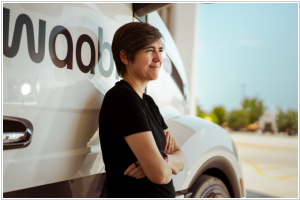
While everyone is fascinated by language models that learn on unlabeled data, the author of this book reminds us that the real heroes of the machine learning revolution are the companies that do the data labeling. After all, besides language tasks, machine learning is used in many industrial processes for which the biggest problem is the lack of high-quality data for training. The data labeling sector now includes global platform giants like Amazon Mechanical Turk, which offers open data platforms and specialized startups such as Scale AI, CrowdFlower and MightyAI. Currently, there are over 10 million data annotators worldwide, spread across countries with low labor costs, including China, India, Malaysia, Thailand and Kenya. In China, Tencent has implemented an ingenious method to cut data labeling costs: by combining CAPTCHA with labeling tasks, they turn the data annotation work over to players who need identity verification, effectively outsourcing a large volume of work for free.
Download PDF
2. Handbook of Linguistic Annotation
2017 by Nancy Ide, James Pustejovsky

Download PDF
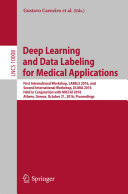
3. Deep Learning and Data Labeling for Medical Applications
2016 by Gustavo Carneiro, Diana Mateus, Loïc Peter, Andrew Bradley, João Manuel R. S. Tavares, Vasileios Belagiannis, João Paulo Papa, Jacinto C. Nascimento, Marco Loog, Zhi Lu, Jaime S. Cardoso, Julien Cornebise
Download PDF
4. Provenance and Annotation of Data and Processes
2008 by Juliana Freire, David Koop

Download PDF
How to download PDF:
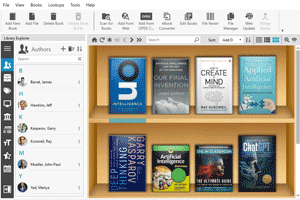
1. Install Gooreader
2. Enter Book ID to the search box and press Enter
3. Click "Download Book" icon and select PDF*
* - note that for yellow books only preview pages are downloaded
However, tagging each data element is a difficult, time-consuming task that requires human annotators. In the full MLOps cycle data preparation (including annotation) takes up almost 80% of the project's time. Furthermore, to tag data in highly specialized niches like healthcare, you may need to hire experts, not just people that can fulfill routine tasks. For example, if you're planning to build an ML model for recognizing tumors in X-ray images, untrained annotators are unlikely to be able to handle it.
And in any case, no matter how experienced and attentive your annotators are, manual annotation can't escape human error. This is inevitable, as annotators typically work with large sets of raw data. Imagine someone annotating 150,000 images, each containing up to ten objects! Therefore, in most cases, cross-labeling is used. It's a process in which multiple people label the same dataset. However, since people have different levels of experience, the labeling criteria and the labels themselves may be inconsistent - annotators may disagree on certain labels. For example, one specialist might rate a hotel review as positive, while another might consider it sarcastic and assign it a negative label.
Here are some PDF books about data annotation:
1. Industry Innovation in the Era of Artificial Intelligence: The AI Compass
2025 by Xiaomei Wang
While everyone is fascinated by language models that learn on unlabeled data, the author of this book reminds us that the real heroes of the machine learning revolution are the companies that do the data labeling. After all, besides language tasks, machine learning is used in many industrial processes for which the biggest problem is the lack of high-quality data for training. The data labeling sector now includes global platform giants like Amazon Mechanical Turk, which offers open data platforms and specialized startups such as Scale AI, CrowdFlower and MightyAI. Currently, there are over 10 million data annotators worldwide, spread across countries with low labor costs, including China, India, Malaysia, Thailand and Kenya. In China, Tencent has implemented an ingenious method to cut data labeling costs: by combining CAPTCHA with labeling tasks, they turn the data annotation work over to players who need identity verification, effectively outsourcing a large volume of work for free.
Download PDF
2. Handbook of Linguistic Annotation
2017 by Nancy Ide, James Pustejovsky
Download PDF
3. Deep Learning and Data Labeling for Medical Applications
2016 by Gustavo Carneiro, Diana Mateus, Loïc Peter, Andrew Bradley, João Manuel R. S. Tavares, Vasileios Belagiannis, João Paulo Papa, Jacinto C. Nascimento, Marco Loog, Zhi Lu, Jaime S. Cardoso, Julien Cornebise
Download PDF
4. Provenance and Annotation of Data and Processes
2008 by Juliana Freire, David Koop
Download PDF
How to download PDF:
1. Install Gooreader
2. Enter Book ID to the search box and press Enter
3. Click "Download Book" icon and select PDF*
* - note that for yellow books only preview pages are downloaded