3 books on AI Hardware [PDF]
Like
24
These books tell about development, design, optimization and implementation of AI hardware (GPUs, TPUs, FPGAs, NNPs).
1. AI-Focused Hardware
2025 by Kai Turing
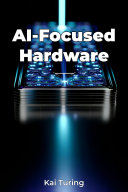
This book is what you get if you ask ChatGPT to write the table of contents of a book about AI Hardware and then ask it to write each chapter. But the author certainly made an effort and also asked it to write all the answers in simple language and even add "Did you know?" paragraphs. But it is interesting to see what ChatGPT thinks about AI Hardware in general - its evolution, current state and prospects. It starts the evolution from ENIAC (why not from Alan Turing's Bombe?), then was the Von Neumann architecture, then GPU, then NPU. It is interesting that ChatGPT distinguishes between NPU and TPU, although they are actually the same thing, just TPU is the name used by Google. And it sees the future of AI Hardware in the use of neuromorphic chips, quantum computers and IMC (in-memory computing) an approach in which calculations occur directly in memory, preventing the constant transfer of data between memory and the processor. The main issue remains the adaptive connection of a large number of hardware cores when training a neural network.
Download PDF
2. Artificial Intelligence and Hardware Accelerators
2023 by Ashutosh Mishra, Jaekwang Cha, Hyunbin Park, Shiho Kim
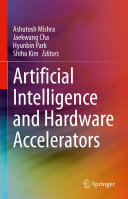
This book digs deeper into the design of chips performing AI computations at the edge (the authors call these chips AI accelerators). In particular, it covers FPGA, TPU, NPU, AI-Wafer Chips and Neuromorphic Architectures. FPGAs are commercially available programmable chips that are relatively inexpensive, have a short time to market and a simple design scheme. However, they are less energy efficient and have lower performance. TPUs are Google's AI accelerators designed specifically to work with the TensorFlow library. TPUs use high-bandwidth on-chip memory and each core contains scalar, vector and matrix units. The NPU architecture is based on parallel data processing and is tailored for energy-efficient DNN acceleration. The NPU can be reprogrammed to switch between models in real time, making it an optimized accelerator for current tasks. AI-Wafer Chips (such as those from Cerebral) contain trillions of transistors. These chips provide higher performance and memory bandwidth than NPUs. But they are expensive and less flexible. Neuromorphic architecture (such as TrueNorth, SpiNNaker) that mimic the brain - provides high speed and efficiency for training neural networks. The downside is that it's in the early stages of development. And finally, there are analog memory accelerators that can store signals in continuous voltage ranges. These arrays of analog synaptic devices are faster and more energy efficient than other AI architectures. IBM recently showed that large analog memory arrays can achieve GPU-like accuracy for DL tasks.
Download PDF
3. Customizable and Adaptive Quantum Processors: Theory and Applications
2023 by Nadia Nedjah, Luiza De Macedo Mourelle
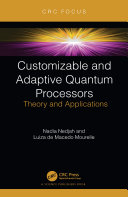
This book describes Quantum Computing, which has become the subject of numerous studies due to its potential to increase the speed of data processing by using algorithms with internal parallelism, which indicates the possibility of polynomial time solutions for NP-complete problems. For example, this is the traveling salesman problem, graph coloring, the knapsack problem. In these problems, we can check the correctness of the solution, but finding this solution (using classical algorithms) is generally very difficult - often exponential time is needed (relative to the size of the problem). The book also investigates Quantum Machine Learning that uses quantum computers to quickly process large matrices. Some of the gradient descent steps (in training a neural networks) can be reduced to operations with matrices, so theoretically it is possible to achieve acceleration. But there is a nuance: quantum algorithms do not give the entire matrix at once, but provide access to individual properties (for example, probability, spectrum). Therefore, their use in neural networks is still an area of research. In addition, quantum computer technology is still searching for ways to control the spins of electrons, which has only been achieved with a few so far and only for short periods of time. At the time of writing the book, the highest number of entangled qubits achieved under special conditions is twenty. In 2015, D-Wave announced a quantum computer with 1,000 qubits (but not fully entangled) and in 2019, the same company announced its next-generation Pegasus quantum processor, with 15 connections per qubit instead of 6 which is still not sufficient for Quantum Machine Learning.
Download PDF
How to download PDF:
1. Install Gooreader
2. Enter Book ID to the search box and press Enter
3. Click "Download Book" icon and select PDF*
* - note that for yellow books only preview pages are downloaded
1. AI-Focused Hardware
2025 by Kai Turing
This book is what you get if you ask ChatGPT to write the table of contents of a book about AI Hardware and then ask it to write each chapter. But the author certainly made an effort and also asked it to write all the answers in simple language and even add "Did you know?" paragraphs. But it is interesting to see what ChatGPT thinks about AI Hardware in general - its evolution, current state and prospects. It starts the evolution from ENIAC (why not from Alan Turing's Bombe?), then was the Von Neumann architecture, then GPU, then NPU. It is interesting that ChatGPT distinguishes between NPU and TPU, although they are actually the same thing, just TPU is the name used by Google. And it sees the future of AI Hardware in the use of neuromorphic chips, quantum computers and IMC (in-memory computing) an approach in which calculations occur directly in memory, preventing the constant transfer of data between memory and the processor. The main issue remains the adaptive connection of a large number of hardware cores when training a neural network.
Download PDF
2. Artificial Intelligence and Hardware Accelerators
2023 by Ashutosh Mishra, Jaekwang Cha, Hyunbin Park, Shiho Kim
This book digs deeper into the design of chips performing AI computations at the edge (the authors call these chips AI accelerators). In particular, it covers FPGA, TPU, NPU, AI-Wafer Chips and Neuromorphic Architectures. FPGAs are commercially available programmable chips that are relatively inexpensive, have a short time to market and a simple design scheme. However, they are less energy efficient and have lower performance. TPUs are Google's AI accelerators designed specifically to work with the TensorFlow library. TPUs use high-bandwidth on-chip memory and each core contains scalar, vector and matrix units. The NPU architecture is based on parallel data processing and is tailored for energy-efficient DNN acceleration. The NPU can be reprogrammed to switch between models in real time, making it an optimized accelerator for current tasks. AI-Wafer Chips (such as those from Cerebral) contain trillions of transistors. These chips provide higher performance and memory bandwidth than NPUs. But they are expensive and less flexible. Neuromorphic architecture (such as TrueNorth, SpiNNaker) that mimic the brain - provides high speed and efficiency for training neural networks. The downside is that it's in the early stages of development. And finally, there are analog memory accelerators that can store signals in continuous voltage ranges. These arrays of analog synaptic devices are faster and more energy efficient than other AI architectures. IBM recently showed that large analog memory arrays can achieve GPU-like accuracy for DL tasks.
Download PDF
3. Customizable and Adaptive Quantum Processors: Theory and Applications
2023 by Nadia Nedjah, Luiza De Macedo Mourelle
This book describes Quantum Computing, which has become the subject of numerous studies due to its potential to increase the speed of data processing by using algorithms with internal parallelism, which indicates the possibility of polynomial time solutions for NP-complete problems. For example, this is the traveling salesman problem, graph coloring, the knapsack problem. In these problems, we can check the correctness of the solution, but finding this solution (using classical algorithms) is generally very difficult - often exponential time is needed (relative to the size of the problem). The book also investigates Quantum Machine Learning that uses quantum computers to quickly process large matrices. Some of the gradient descent steps (in training a neural networks) can be reduced to operations with matrices, so theoretically it is possible to achieve acceleration. But there is a nuance: quantum algorithms do not give the entire matrix at once, but provide access to individual properties (for example, probability, spectrum). Therefore, their use in neural networks is still an area of research. In addition, quantum computer technology is still searching for ways to control the spins of electrons, which has only been achieved with a few so far and only for short periods of time. At the time of writing the book, the highest number of entangled qubits achieved under special conditions is twenty. In 2015, D-Wave announced a quantum computer with 1,000 qubits (but not fully entangled) and in 2019, the same company announced its next-generation Pegasus quantum processor, with 15 connections per qubit instead of 6 which is still not sufficient for Quantum Machine Learning.
Download PDF
How to download PDF:
1. Install Gooreader
2. Enter Book ID to the search box and press Enter
3. Click "Download Book" icon and select PDF*
* - note that for yellow books only preview pages are downloaded