Top 100 AI startups in USA
1
Funding: $8.1B
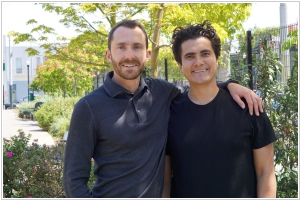
Crusoe provides AI Cloud an Infrastructure as a Service platform equipped with specialized GPUs for resource-intensive AI workloads. Its managed inference API provides best in class speed, throughput, and reliability. Developers can choose from top open/open-source models or bring their own fine-tuned model for enhanced LLM performance. By manufacturing modular data centers, called Spark, at its own facilities, Crusoe can deploy compute capacity quickly and without the need for large construction workforces.
Crusoe provides AI Cloud an Infrastructure as a Service platform equipped with specialized GPUs for resource-intensive AI workloads. Its managed inference API provides best in class speed, throughput, and reliability. Developers can choose from top open/open-source models or bring their own fine-tuned model for enhanced LLM performance. By manufacturing modular data centers, called Spark, at its own facilities, Crusoe can deploy compute capacity quickly and without the need for large construction workforces.
2
Funding: $753M
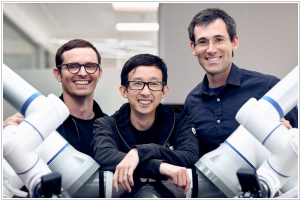
Generalist is developing an AI foundation model that can work with various robots. It claims its newly released Gen 1.5 model enables robots to master new tasks from video demonstrations as short as 3 to 12 seconds long. The startup is working with a handful of customers, using their feedback to tailor the model for specific use cases, according to one source.
Generalist is developing an AI foundation model that can work with various robots. It claims its newly released Gen 1.5 model enables robots to master new tasks from video demonstrations as short as 3 to 12 seconds long. The startup is working with a handful of customers, using their feedback to tailor the model for specific use cases, according to one source.
3

Funding: $655M
Also develops autonomous driving technology for commercial delivery robots quad TM-Q.
Also develops autonomous driving technology for commercial delivery robots quad TM-Q.
4

Funding: $392M
Clay is a personal CRM that uses AI to query your personal database to learn even more about your network and aid you with maintaining your relationships. The platform combines company data, research and automation tools, and AI applications to support lead discovery and outreach. Clay is also using AI agents to automate sales and growth-related tasks, while continuing to grow its customer base and platform-generated revenue.
Clay is a personal CRM that uses AI to query your personal database to learn even more about your network and aid you with maintaining your relationships. The platform combines company data, research and automation tools, and AI applications to support lead discovery and outreach. Clay is also using AI agents to automate sales and growth-related tasks, while continuing to grow its customer base and platform-generated revenue.
5

Funding: $361.6M
Wispr Flow develops a voice dictation app that converts speech to text for writing, messaging, and note taking. It created own model to improve the quality of speech understanding. Wispr’s desktop app Notetaker can record speech and display summaries and action items. The company is also partnering with hardware makers, like the Oasis ring, to let customers dictate on their devices without speaking loudly.
Wispr Flow develops a voice dictation app that converts speech to text for writing, messaging, and note taking. It created own model to improve the quality of speech understanding. Wispr’s desktop app Notetaker can record speech and display summaries and action items. The company is also partnering with hardware makers, like the Oasis ring, to let customers dictate on their devices without speaking loudly.
6

Funding: $354.2M
Gatik AI is the autonomous vehicle startup focused on short-haul delivery. The startup built a fleet of driverless box trucks, manufactured by Isuzu Motors, that could be used to deliver food and beverages for suppliers. It started small with fixed-route trips that were less than 10 miles, and grew to dynamic routes with dozens of pick-up and drop-off locations that cover up to 400 miles. The company has several high-profile customers, including Loblaws, Kroger, Tyson Foods, Walmart, PepsiCo.
Gatik AI is the autonomous vehicle startup focused on short-haul delivery. The startup built a fleet of driverless box trucks, manufactured by Isuzu Motors, that could be used to deliver food and beverages for suppliers. It started small with fixed-route trips that were less than 10 miles, and grew to dynamic routes with dozens of pick-up and drop-off locations that cover up to 400 miles. The company has several high-profile customers, including Loblaws, Kroger, Tyson Foods, Walmart, PepsiCo.
7

Funding: $325M
Instinct develops an agent that the company says can efficiently organize your life. Users connect it to their apps and devices and can communicate with it via texts and calls.
Instinct develops an agent that the company says can efficiently organize your life. Users connect it to their apps and devices and can communicate with it via texts and calls.
8

Funding: $200M
Spur Intelligence is a bot-detection startup that offers IP intelligence solutions for detecting abuse, reducing fraud, and protecting workflows.
Spur Intelligence is a bot-detection startup that offers IP intelligence solutions for detecting abuse, reducing fraud, and protecting workflows.

10

Funding: $138M
Ema is an artificial intelligence software company that develops AI agents for automating enterprise workflows. It uses teams of AI agents to automate corporate processes across HR, IT, and finance. Ema first “wraps” around an enterprise’s existing applications, before customers can reduce their dependence on some of those products — and, in some cases, replace them altogether.
Ema is an artificial intelligence software company that develops AI agents for automating enterprise workflows. It uses teams of AI agents to automate corporate processes across HR, IT, and finance. Ema first “wraps” around an enterprise’s existing applications, before customers can reduce their dependence on some of those products — and, in some cases, replace them altogether.
11

Discovery Loop is an autonomous artificial intelligence, dedicated to deeply automating machine learning, science, and engineering. The startup was founded by Google's chief scientific officers, whose work helped to build Google's AI infrastructure and modern AI research. Google is the startup's primary investor and provides computing power, so it's like a spinoff. The startup focuses on developing ML model recursive self-improvement with minimal or no human intervention. The founders claim this approach can automate much of the experimental cycle of scientific progress, helping researchers design equipment, discover drugs, develop new materials, and accelerate other forms of discovery.
12

Funding: $85M
Hang Ten Systems is an enterprise software company that builds, modernizes, and operates custom software using an AI-native approach. Hang Ten says its edge lies not in building another AI model, but in adapting AI to the complex software development processes of large enterprises. The startup’s engineers rely on an in-house framework, Hobie, that packages reusable AI “skills” for regulated industries and complex enterprise software projects.
Hang Ten Systems is an enterprise software company that builds, modernizes, and operates custom software using an AI-native approach. Hang Ten says its edge lies not in building another AI model, but in adapting AI to the complex software development processes of large enterprises. The startup’s engineers rely on an in-house framework, Hobie, that packages reusable AI “skills” for regulated industries and complex enterprise software projects.
13

Funding: $52M
Fish Audio is an AI platform for expressive text‑to‑speech and voice cloning with pro‑grade voices and multilingual support (a library of more than 15,000 natural language controls). One way the startup has built its library of voices is by asking users to submit their own voices for training its models, and compensating them if their voices are used. The company open-sources most of its speech-generation models but it also offers paid monthly plans suited for creators and teams that unlock a set number of minutes of generation plus voice-cloning features and an enterprise version of its APIs and platform.
Fish Audio is an AI platform for expressive text‑to‑speech and voice cloning with pro‑grade voices and multilingual support (a library of more than 15,000 natural language controls). One way the startup has built its library of voices is by asking users to submit their own voices for training its models, and compensating them if their voices are used. The company open-sources most of its speech-generation models but it also offers paid monthly plans suited for creators and teams that unlock a set number of minutes of generation plus voice-cloning features and an enterprise version of its APIs and platform.
15

Funding: $925.4M
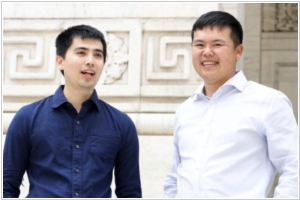
Etched.ai is an AI chip startup that develops Sohu, a chip designed specifically for running transformer models.
Etched.ai is an AI chip startup that develops Sohu, a chip designed specifically for running transformer models.
16

Funding: $21.7M
Dili focuses on AI for compliance in construction projects, particularly those getting some kind of federal funding. Given high stakes in these projects, Dili’s architecture intends to prevent any LLM-based fuzziness from sneaking into the final product. Contemporary AI models are only used in the company’s data layer, the engine for taking unstructured documents and translating them into structured data. From there, a deterministic system sorts the data according to the complex-but-static compliance rules. When it works right, a task that used to take a full day’s work can now be dispatched in a matter of minutes.
Dili focuses on AI for compliance in construction projects, particularly those getting some kind of federal funding. Given high stakes in these projects, Dili’s architecture intends to prevent any LLM-based fuzziness from sneaking into the final product. Contemporary AI models are only used in the company’s data layer, the engine for taking unstructured documents and translating them into structured data. From there, a deterministic system sorts the data according to the complex-but-static compliance rules. When it works right, a task that used to take a full day’s work can now be dispatched in a matter of minutes.
17

Funding: $15M
Infinity is building software to make it easier for AI chips to run AI models. It's s CUDA-alternative kernel software that works with any type of chip, like SRAM, GPUs, phone chips, and Systolic Arrays. Infinity is also building a universal inference library to run on all chips, allowing these chips to automate replicating state-of-the-art research results.
Infinity is building software to make it easier for AI chips to run AI models. It's s CUDA-alternative kernel software that works with any type of chip, like SRAM, GPUs, phone chips, and Systolic Arrays. Infinity is also building a universal inference library to run on all chips, allowing these chips to automate replicating state-of-the-art research results.
18

Funding: $30M
Encore AI turns customer conversations into revenue-generating AI agents for high-value interactions like loans and insurance. The company’s platform collects call recordings, emails, and text messages, and connects that info with CRM systems. It then divides the customer interactions into stages and tries to find out which parts of a conversation helped move the process along, and which failed. This lets Encore’s agents learn what works best for any particular client or interaction, as different employees may be either more or less effective at different points during a sales or customer success process.
Encore AI turns customer conversations into revenue-generating AI agents for high-value interactions like loans and insurance. The company’s platform collects call recordings, emails, and text messages, and connects that info with CRM systems. It then divides the customer interactions into stages and tries to find out which parts of a conversation helped move the process along, and which failed. This lets Encore’s agents learn what works best for any particular client or interaction, as different employees may be either more or less effective at different points during a sales or customer success process.
19

Funding: $22M
Smallest.ai builds the full-stack voice AI infrastructure behind real-time, human-like enterprise voice agents. The company wants to make speaking to an AI agent indistinguishable from talking to a human. To do so, it’s developing a small voice model designed to mimic how humans process information by listening, thinking, and speaking simultaneously. The startup’s model serves as a real-time intelligence layer that enables natural customer conversations on specific topics, with virtually zero response lag. But if the model encounters a subject outside its limited knowledge base, Smallest.ai hands off the query to a large foundational model
Smallest.ai builds the full-stack voice AI infrastructure behind real-time, human-like enterprise voice agents. The company wants to make speaking to an AI agent indistinguishable from talking to a human. To do so, it’s developing a small voice model designed to mimic how humans process information by listening, thinking, and speaking simultaneously. The startup’s model serves as a real-time intelligence layer that enables natural customer conversations on specific topics, with virtually zero response lag. But if the model encounters a subject outside its limited knowledge base, Smallest.ai hands off the query to a large foundational model
20

Funding: $10M
Mirai allows to deploy and run models of any architecture directly on user devices. It developed fastest inference engine built from scratch for Apple devices.
Mirai allows to deploy and run models of any architecture directly on user devices. It developed fastest inference engine built from scratch for Apple devices.
21

Funding: $42.4B
xAI is Elon Musk's me-too startup, which couldn't resist the AI craze and invested heavily in the project. Initially, the company created the AI chatbot Grok for X/Twitter users, and later grew into a universal LLM provider for users and companies (via API). Grok's distinguishing feature is its more censorship-free worldview (which has occasionally led to controversy). Grok also initially focused on real-time context generation from online data (rather than pre-training). In addition to language, Grok can generate images. xAI also runs the world's largest supercomputer, Colossus and is engaged in AGI research (accoring to Elon Mask, xAI seeks to understand the true nature of the universe).
xAI is Elon Musk's me-too startup, which couldn't resist the AI craze and invested heavily in the project. Initially, the company created the AI chatbot Grok for X/Twitter users, and later grew into a universal LLM provider for users and companies (via API). Grok's distinguishing feature is its more censorship-free worldview (which has occasionally led to controversy). Grok also initially focused on real-time context generation from online data (rather than pre-training). In addition to language, Grok can generate images. xAI also runs the world's largest supercomputer, Colossus and is engaged in AGI research (accoring to Elon Mask, xAI seeks to understand the true nature of the universe).
22

Funding: $2.8B
Groq creates hardware AI accelerators for large language models that improve performance and reduce power consumption compared to classic GPU accelerators. It produces a Language Processing Unit (LPU) chip that uses exclusively on-chip SRAM memory (without external DRAM/HBM modules), which requires installing multiple chips for scalable payloads. Its architecture minimizes elements associated with unpredictable behavior (branch prediction, caches, etc.). Groq enables best performance for small and medium batch/task sizes, especially if the model fits into their configuration. The software-defined, single-core architecture removes traditional software complexity while continuous, token-based execution delivers consistent performance without tradeoffs. Groq licenses its technology to NVidia. The company also provides its cloud AI inference platform built for developers - available in public, private, or co-cloud instances.
Groq creates hardware AI accelerators for large language models that improve performance and reduce power consumption compared to classic GPU accelerators. It produces a Language Processing Unit (LPU) chip that uses exclusively on-chip SRAM memory (without external DRAM/HBM modules), which requires installing multiple chips for scalable payloads. Its architecture minimizes elements associated with unpredictable behavior (branch prediction, caches, etc.). Groq enables best performance for small and medium batch/task sizes, especially if the model fits into their configuration. The software-defined, single-core architecture removes traditional software complexity while continuous, token-based execution delivers consistent performance without tradeoffs. Groq licenses its technology to NVidia. The company also provides its cloud AI inference platform built for developers - available in public, private, or co-cloud instances.
23

Funding: $781M
ElevenLabs develops voice AI models for content creators and publishers. It has created two platforms: the Agents Platform for improving customer engagement and Creative Platform for creating AI-powered voice content. The platform's capabilities include converting text into realistic speech in over 70 languages, configuring, deploying, and monitoring conversational agents, creating studio-quality tracks in any genre and style, transcribing any audio with the highest accuracy, and creating an exact copy of any voice. All platform capabilities are accessible via an API. ElevenLabs is used to create films, advertising, audiobooks and podcasts.
ElevenLabs develops voice AI models for content creators and publishers. It has created two platforms: the Agents Platform for improving customer engagement and Creative Platform for creating AI-powered voice content. The platform's capabilities include converting text into realistic speech in over 70 languages, configuring, deploying, and monitoring conversational agents, creating studio-quality tracks in any genre and style, transcribing any audio with the highest accuracy, and creating an exact copy of any voice. All platform capabilities are accessible via an API. ElevenLabs is used to create films, advertising, audiobooks and podcasts.
24

Funding: $337M
Odyssey is an AI lab focused on creating universal world models, which the company calls new form of audiovisual intelligence. These models are to form the basis of the next generation of games, films, education content, training simulations and advertising. These models don't just generate video - they enable interaction with the 3D world i.e. creation of interactive videos. The company achieves this through a new multi-stage training pipeline that transforms the model into a causal behavioral video model that reacts to actions in real time and continuously responds to input. As you play the video, you shape it in real time using natural text prompts, similar to communicating with a language model.
Odyssey is an AI lab focused on creating universal world models, which the company calls new form of audiovisual intelligence. These models are to form the basis of the next generation of games, films, education content, training simulations and advertising. These models don't just generate video - they enable interaction with the 3D world i.e. creation of interactive videos. The company achieves this through a new multi-stage training pipeline that transforms the model into a causal behavioral video model that reacts to actions in real time and continuously responds to input. As you play the video, you shape it in real time using natural text prompts, similar to communicating with a language model.
25
Funding: $327M
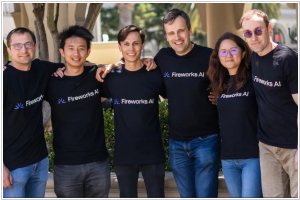
Fireworks AI provides cloud-based platform that enables developers to build, customize and scale AI applications using open-source models. It features a library of ready-made models and enables scaling inference at minimal cost. It also includes coding assistance tools (IDE assistants, code generation, debugging agents), agent systems for creating multi-stage reasoning, planning and execution pipelines, ready-to-use enterprise assistants (for summarization, semantic search, personalized recommendations), enterprise RAG search for knowledge bases. The company provides SDK for prototyping, quality assessment, and scaling with confidence.
Fireworks AI provides cloud-based platform that enables developers to build, customize and scale AI applications using open-source models. It features a library of ready-made models and enables scaling inference at minimal cost. It also includes coding assistance tools (IDE assistants, code generation, debugging agents), agent systems for creating multi-stage reasoning, planning and execution pipelines, ready-to-use enterprise assistants (for summarization, semantic search, personalized recommendations), enterprise RAG search for knowledge bases. The company provides SDK for prototyping, quality assessment, and scaling with confidence.
26

Funding: $300M
Simile is building a foundation model that predicts human behavior in any situation, and a product that deploys it at scale. It creates simulated AI users for areas like marketing and product research. The startup’s stated mission of simulating “all eight billion people on earth, accurately and honestly” is preposterous — the whole reason to conduct market research is because humans are unpredictable, guided, as we are, by both emotions and reason.
Simile is building a foundation model that predicts human behavior in any situation, and a product that deploys it at scale. It creates simulated AI users for areas like marketing and product research. The startup’s stated mission of simulating “all eight billion people on earth, accurately and honestly” is preposterous — the whole reason to conduct market research is because humans are unpredictable, guided, as we are, by both emotions and reason.
27

Funding: $160M
Loop provides a platform that manages logistics and supply chain data through automation and analytics tools. It's using AI to offer companies predictive remedies - takes unstructured data (PDFs with no optically recognized characters, sheets of paper, digital messages) and gives it structure, in order to automate tasks. Loop makes the automation possible by developing a harness that coordinates multiple AI models. This helps companies better identify where they may be losing money or time, or spot the risks of over- or under-supplying a given product.
Loop provides a platform that manages logistics and supply chain data through automation and analytics tools. It's using AI to offer companies predictive remedies - takes unstructured data (PDFs with no optically recognized characters, sheets of paper, digital messages) and gives it structure, in order to automate tasks. Loop makes the automation possible by developing a harness that coordinates multiple AI models. This helps companies better identify where they may be losing money or time, or spot the risks of over- or under-supplying a given product.
28

Funding: $150M
Inferact mission is to accelerate AI progress by making inference cheaper and faster.
Inferact mission is to accelerate AI progress by making inference cheaper and faster.
29

Funding: $100M
Emergent is an AI-powered platform for creating websites, web- and mobile apps. It lets you create and host projects, provides access to cutting-edge LLM models and chat interface where you can explain how the app should work in natural language, while the AI takes care of coding, design and deployment. As advertised, the generated code is ready to use and the resulting app is entirely yours. But Emergent is designed not only for complete beginners but also for experienced developers. You can create and deploy your own specialized agents tailored to your workflows, implement integrations that connect services, automate tasks and accelerate delivery, collaborate with your team in real time and sync projects with GitHub for version control.
Emergent is an AI-powered platform for creating websites, web- and mobile apps. It lets you create and host projects, provides access to cutting-edge LLM models and chat interface where you can explain how the app should work in natural language, while the AI takes care of coding, design and deployment. As advertised, the generated code is ready to use and the resulting app is entirely yours. But Emergent is designed not only for complete beginners but also for experienced developers. You can create and deploy your own specialized agents tailored to your workflows, implement integrations that connect services, automate tasks and accelerate delivery, collaborate with your team in real time and sync projects with GitHub for version control.
30

Funding: $60M
Outtake is a digital trust platform automating threat classification, detection and response to enhance enterprise cybersecurity measures for AI-driven attack age. Its agentic AI secures modern attack surfaces with advanced search, real-time threat classification, and automated response. AI agents adapt and improve as fast as the threats themselves, learning and responding to new attack patterns in real-time. Outtake names among its customers OpenAI, Pershing Square, AppLovin, and federal agencies.
Outtake is a digital trust platform automating threat classification, detection and response to enhance enterprise cybersecurity measures for AI-driven attack age. Its agentic AI secures modern attack surfaces with advanced search, real-time threat classification, and automated response. AI agents adapt and improve as fast as the threats themselves, learning and responding to new attack patterns in real-time. Outtake names among its customers OpenAI, Pershing Square, AppLovin, and federal agencies.
31

Funding: $50M
Rox leverages AI agents to enhance sales productivity, providing actionable insights that help close deals.
Rox leverages AI agents to enhance sales productivity, providing actionable insights that help close deals.
32

Funding: $40M
Articul8 develops specialized GenAI systems that operate within clients' own local IT environment, rather than relying on cloud general-purpose models. Instead of selling standalone models, the company offers its technology as software applications and AI agents tailored to specific business functions, targeting regulated industries such as energy, manufacturing, aerospace, financial services, semiconductors, where data accuracy, auditability and control are critical. The company develops agentic reasoning engine that autonomously assembles the right squad of domain-specific agents for every mission.
Articul8 develops specialized GenAI systems that operate within clients' own local IT environment, rather than relying on cloud general-purpose models. Instead of selling standalone models, the company offers its technology as software applications and AI agents tailored to specific business functions, targeting regulated industries such as energy, manufacturing, aerospace, financial services, semiconductors, where data accuracy, auditability and control are critical. The company develops agentic reasoning engine that autonomously assembles the right squad of domain-specific agents for every mission.
33

Funding: $34.5M
InsightFinder specializes in AI-powered observability and predictive analytics for IT operations.
InsightFinder specializes in AI-powered observability and predictive analytics for IT operations.
34
Funding: $27M
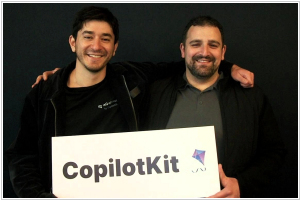
CopilotKit develops framework for creating interactive in-app AI agents. The company believes that in the future, agents will run inside apps, understand user actions, perform necessary actions, and display useful interfaces instead of simply returning long blocks of text. The company's open AG-UI protocol standardizes how AI agents connect and interact with user interfaces (such as a web browser or app), enabling such features as threaded chat, interface tool calls, and state exchange to enable human-assisted functionality. CopilotKit is also developing an enterprise toolkit based on AG-UI, adding support, self-service deployment features, and other necessary features for companies planning to integrate agents into their products.
CopilotKit develops framework for creating interactive in-app AI agents. The company believes that in the future, agents will run inside apps, understand user actions, perform necessary actions, and display useful interfaces instead of simply returning long blocks of text. The company's open AG-UI protocol standardizes how AI agents connect and interact with user interfaces (such as a web browser or app), enabling such features as threaded chat, interface tool calls, and state exchange to enable human-assisted functionality. CopilotKit is also developing an enterprise toolkit based on AG-UI, adding support, self-service deployment features, and other necessary features for companies planning to integrate agents into their products.
35

Funding: $25M
Deccan AI specializes in providing high-quality, human-labeled data for AI model training and evaluation.
Deccan AI specializes in providing high-quality, human-labeled data for AI model training and evaluation.
36

Funding: $22M
Runpod is a cloud platform designed for GPUs, enabling developers to deploy customized full-stack AI applications.
Runpod is a cloud platform designed for GPUs, enabling developers to deploy customized full-stack AI applications.
37

Funding: $20.1M
Vapi is a voice AI platform that allows developers to build, test and deploy voice agents for phone calls and customer support.
Vapi is a voice AI platform that allows developers to build, test and deploy voice agents for phone calls and customer support.
38

Funding: $18.2M
Shade is developing a cloud-based media storage platform designed for agencies, sports media teams, and podcasters to easily store and search their media using natural language queries. The startup claims that their search doesn't just display a specific video but pinpoints the exact moment in the video where the scene corresponding to the search query occurs. The tool also automatically transcribes the audio for easier searching. Users can search by meaning, transcript, and facial recognition for tagged individuals. For example, users can search for "person with laptop in snow," and the system will return all relevant clips with timestamps.
Shade is developing a cloud-based media storage platform designed for agencies, sports media teams, and podcasters to easily store and search their media using natural language queries. The startup claims that their search doesn't just display a specific video but pinpoints the exact moment in the video where the scene corresponding to the search query occurs. The tool also automatically transcribes the audio for easier searching. Users can search by meaning, transcript, and facial recognition for tagged individuals. For example, users can search for "person with laptop in snow," and the system will return all relevant clips with timestamps.
39

Funding: $10.5M
Risotto is an AI ChatOps for IT support, boosting efficiency and security with instant resolution and 24/7 automation, all via chat.
Risotto is an AI ChatOps for IT support, boosting efficiency and security with instant resolution and 24/7 automation, all via chat.
40

Funding: $11M
Littlebird is the only full-context AI. It works in the background, observing your screen and transcribing your meetings, to build a private memory of your work.
Littlebird is the only full-context AI. It works in the background, observing your screen and transcribing your meetings, to build a private memory of your work.
41

Funding: $9.5M
Guide Labs is a software development company that builds interpretable models to explain reasoning that are easy to steer, debug, and align.
Guide Labs is a software development company that builds interpretable models to explain reasoning that are easy to steer, debug, and align.
42

Funding: $9.3M
Onton is developing AI-chat-based search engine for online furniture stores. The company uses so-called neurosymbolic architecture to overcome the hallucination problems inherent in LLM and provide higher-quality, logical search results. The startup's model can also be trained using real-world information that doesn't necessarily need to be included in product descriptions. For example, if you search for pet-friendly furniture, the model will learn and start return only furniture that is stain- and scratch-resistant. You can also upload an image to Onton's chat to generate a desired design for your home or office, and Onton will then select furniture based on it. The service also offers an infinite image generation canvas, where you can add existing images along with products you've found for inspiration.
Onton is developing AI-chat-based search engine for online furniture stores. The company uses so-called neurosymbolic architecture to overcome the hallucination problems inherent in LLM and provide higher-quality, logical search results. The startup's model can also be trained using real-world information that doesn't necessarily need to be included in product descriptions. For example, if you search for pet-friendly furniture, the model will learn and start return only furniture that is stain- and scratch-resistant. You can also upload an image to Onton's chat to generate a desired design for your home or office, and Onton will then select furniture based on it. The service also offers an infinite image generation canvas, where you can add existing images along with products you've found for inspiration.
43

Funding: $9M
Probably develops technology that can prevent LLM hallucinations and simple factual errors. It's a sophisticated security system, which the startup describes as a "mechanical data suit." LLM results are verified using a deterministic validation system that returns any results that don't match the dataset. Each result is accompanied by a link to the source and an audit trail of the development process, a practice that is becoming increasingly common among AI tools.
Probably develops technology that can prevent LLM hallucinations and simple factual errors. It's a sophisticated security system, which the startup describes as a "mechanical data suit." LLM results are verified using a deterministic validation system that returns any results that don't match the dataset. Each result is accompanied by a link to the source and an audit trail of the development process, a practice that is becoming increasingly common among AI tools.
44
Funding: $8.4M
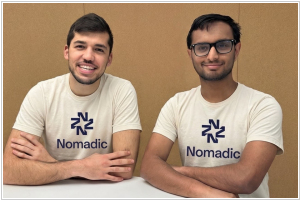
Nomadic helps companies developing self-driving cars, robots manipulating the physical environment, or autonomous construction equipment to analyse and organize collected video data for evaluation and training. Becuase the most valuable data depicts events that rarely occur and can befuddle inexperienced physical AI models, Nomadic has developed a platform that turns footage into a structured, searchable dataset through a collection of vision language models. That, in turn, allows for better fleet monitoring and the creation of unique datasets for reinforcement learning and faster iteration. Customers like Zoox, Mitsubishi Electric, Natix Network, and Zendar are already using the platform to develop intelligent machines.
Nomadic helps companies developing self-driving cars, robots manipulating the physical environment, or autonomous construction equipment to analyse and organize collected video data for evaluation and training. Becuase the most valuable data depicts events that rarely occur and can befuddle inexperienced physical AI models, Nomadic has developed a platform that turns footage into a structured, searchable dataset through a collection of vision language models. That, in turn, allows for better fleet monitoring and the creation of unique datasets for reinforcement learning and faster iteration. Customers like Zoox, Mitsubishi Electric, Natix Network, and Zendar are already using the platform to develop intelligent machines.
45

Funding: $7M
Atomic Canyon uses artificial intelligence to improve efficiency and optmize operations of nuclear power plants. The company is developing Neutron, an AI search engine for searching billions of pages of nuclear documentation. Using the Nuclear Regulatory Commission (NRC) database and the world's fastest supercomputer at Oak Ridge National Laboratory (ORNL), it understands and processes nuclear terminology with unprecedented accuracy, interpreting complex documents to let executives make more informed data-driven decisions. Neutron is based on open-source AI model FERMI intended for sentence vector representations, specifically designed for nuclear data. Atomic Canyon is working in partnership with PG&E's Diablo Canyon power plant, the only remaining nuclear power plant in California.
Atomic Canyon uses artificial intelligence to improve efficiency and optmize operations of nuclear power plants. The company is developing Neutron, an AI search engine for searching billions of pages of nuclear documentation. Using the Nuclear Regulatory Commission (NRC) database and the world's fastest supercomputer at Oak Ridge National Laboratory (ORNL), it understands and processes nuclear terminology with unprecedented accuracy, interpreting complex documents to let executives make more informed data-driven decisions. Neutron is based on open-source AI model FERMI intended for sentence vector representations, specifically designed for nuclear data. Atomic Canyon is working in partnership with PG&E's Diablo Canyon power plant, the only remaining nuclear power plant in California.
46

Funding: $6M
AgentMail provides an API-first email platform that enables AI agents to send, receive, and manage emails with automation and analytics.
AgentMail provides an API-first email platform that enables AI agents to send, receive, and manage emails with automation and analytics.
47

Funding: $5.5M
VoiceRun is a platform for developing voice-enabled AI agents. Unlike visual agent-builders, it allows to program voice agent behavior using code, which gives greater flexibility. In addition to creating code-based agents, VoiceRun also allows users to conduct A/B testing and instantly deploy solutions with a single click through the VoiceRun cloud telephony system and swap models instantly, backed by enterprise-grade security. The company is focused on enterprise developers, helping companies, for example, implement AI in their customer support services or assist tech companies in launching voice-based products. For example, the platform is used to create an AI concierge for restaurant reservations.
VoiceRun is a platform for developing voice-enabled AI agents. Unlike visual agent-builders, it allows to program voice agent behavior using code, which gives greater flexibility. In addition to creating code-based agents, VoiceRun also allows users to conduct A/B testing and instantly deploy solutions with a single click through the VoiceRun cloud telephony system and swap models instantly, backed by enterprise-grade security. The company is focused on enterprise developers, helping companies, for example, implement AI in their customer support services or assist tech companies in launching voice-based products. For example, the platform is used to create an AI concierge for restaurant reservations.
48
Funding: $3.5M
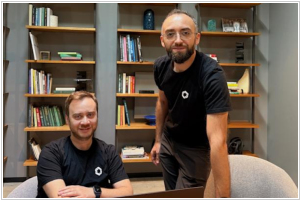
Modelence is a Software Development firm offering typeScript cloud services AI apps production.
Modelence is a Software Development firm offering typeScript cloud services AI apps production.
49

Funding: $2.5M
First Voyage is developing a mobile app, Momo Self Care, featuring a virtual AI pet named Momo, who helps users to form desired habits. You care for Momo and it reminds you to complete habit-building tasks and rewards you with coins for completing them. The coins can be used to purchase in-app items to further personalize your pet. Users can also talk to Momo about self-care and the AI companion will recommend habits and tasks based on what you want to achieve. The most popular habits (according to the developers) are related to productivity, spirituality and mindfulness. Momo includes safety mechanisms, such as suggestion filters, to ensure that communication between the AI and users remains within acceptable guidelines.
First Voyage is developing a mobile app, Momo Self Care, featuring a virtual AI pet named Momo, who helps users to form desired habits. You care for Momo and it reminds you to complete habit-building tasks and rewards you with coins for completing them. The coins can be used to purchase in-app items to further personalize your pet. Users can also talk to Momo about self-care and the AI companion will recommend habits and tasks based on what you want to achieve. The most popular habits (according to the developers) are related to productivity, spirituality and mindfulness. Momo includes safety mechanisms, such as suggestion filters, to ensure that communication between the AI and users remains within acceptable guidelines.
50

Pebble makes a smart ring with artificial intelligence for making short notes. You press a button on the ring, speak your thought and it's sent to your phone, added to your notebook app and can be set as a reminder. The AI is enabled only in the Pebble app on the phone, which uses an open-source model that runs locally and doesn't send data to the cloud, so it's private and doesn't require an internet connection or subscription. The ring is made of durable stainless steel and is water-resistant. As advertised, the battery lasts for years - you never need to charge it.