5 books on Computer Vision [PDF]
Like
24
Books on computer vision describe the principles, algorithms and technologies used for image and video analysis, object recognition and image generation.
1. Mastering New Age Computer Vision: Advanced techniques in computer vision object detection, segmentation and deep learning
2025 by Zonunfeli Ralte
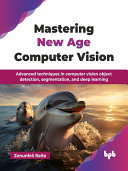
By New Age Computer Vision, the author of this book means the use of transformers, which, in the author's opinion, mark the third generation of CV technologies (after ML recognition of hand-crafted patterns and CNN - convolutional neural networks). In particular, the book explanes the DETR model, created by Meta in 2020. It allows to detect objects in a image with a large number of objects, and, unlike the popular YOLO model, can also determine what kind of objects they are (however, to do this it consumes significantly more computer resources than YOLO). In fact, DETR is a combination of a transformer and CNN. First, the image passes through a convolutional neural network and feature map is created, then it's fed to the transformer. As a result, the transformer returns the coordinates of objects, the sizes of the rectangles-boundaries and the names of the detected objects. Interestingly, knowing object name/title allows DETR to more accurately (than YOLO) determine its coordinates and boundaries. Imagine that you are looking for a cat in a photo. If you know you're looking for a cat, it will be easier to tell where its body ends and the background begins.
Download PDF
2. Computer Vision: Algorithms and Applications
2023 by Richard Szeliski
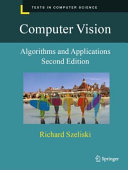
From this book, I found out that real-world applications of computer vision range from simple image enhancements to complex tasks like 3D reconstruction. For example, CV techniques are applied in medical imaging and consumer-level tasks like image stitching. You'll get acquainted with engineering methodologies that are integral in solving fundamental computer vision challenges. For example statistical models that play an important role in solving CV problems and physical models of the imaging process that can be used to describe scenes.
Download PDF
3. Practical Machine Learning for Computer Vision
2021 by Valliappa Lakshmanan, Martin Görner, Ryan Gillard
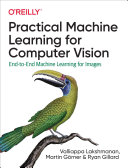
This book shows how machine learning models can be used for tasks like object detection and image captioning. It features TensorFlow and Keras as key tools for building and deploying machine learning models in computer vision. It also underlines that data preprocessing and model evaluation are vital steps in crafting effective CV solutions and interpretability is an important aspect of computer vision models for ensuring their practical use.
Download PDF
4. Computer Vision Metrics: Survey, Taxonomy, and Analysis
2014 by Scott Krig
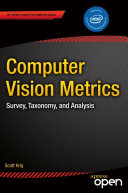
This author provides clear OpenCV library description and practical resources for applying computer vision technologies in real-life tasks. It covers over 100 methods for feature description in CV. The taxonomy of these features includes local, regional and global categories. Fine-tuning the feature-descriptors helps achieve specific goals like robustness and invariance. You'll understand why accuracy, efficiency and distance metrics are important in creating computer vision algorithms.
Download PDF
5. Computer Vision: Models, Learning, and Inference
2012 by Simon J. D. Prince
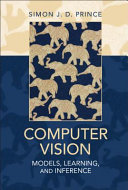
From this book you'll know that probabilistic models are central to learning and inference in computer vision models, that training data helps infer relationships between images and their underlying structures. For example, face recognition and 3D structure extraction can be achieved by learning from image data. Modern techniques like graph cuts and multiple view geometry are key in solving camera calibration and object tracking problems. In this book over 70 algorithms are described in detail, covering a wide range of computer vision challenges.
Download PDF
How to download PDF:
1. Install Gooreader
2. Enter Book ID to the search box and press Enter
3. Click "Download Book" icon and select PDF*
* - note that for yellow books only preview pages are downloaded
1. Mastering New Age Computer Vision: Advanced techniques in computer vision object detection, segmentation and deep learning
2025 by Zonunfeli Ralte
By New Age Computer Vision, the author of this book means the use of transformers, which, in the author's opinion, mark the third generation of CV technologies (after ML recognition of hand-crafted patterns and CNN - convolutional neural networks). In particular, the book explanes the DETR model, created by Meta in 2020. It allows to detect objects in a image with a large number of objects, and, unlike the popular YOLO model, can also determine what kind of objects they are (however, to do this it consumes significantly more computer resources than YOLO). In fact, DETR is a combination of a transformer and CNN. First, the image passes through a convolutional neural network and feature map is created, then it's fed to the transformer. As a result, the transformer returns the coordinates of objects, the sizes of the rectangles-boundaries and the names of the detected objects. Interestingly, knowing object name/title allows DETR to more accurately (than YOLO) determine its coordinates and boundaries. Imagine that you are looking for a cat in a photo. If you know you're looking for a cat, it will be easier to tell where its body ends and the background begins.
Download PDF
2. Computer Vision: Algorithms and Applications
2023 by Richard Szeliski
From this book, I found out that real-world applications of computer vision range from simple image enhancements to complex tasks like 3D reconstruction. For example, CV techniques are applied in medical imaging and consumer-level tasks like image stitching. You'll get acquainted with engineering methodologies that are integral in solving fundamental computer vision challenges. For example statistical models that play an important role in solving CV problems and physical models of the imaging process that can be used to describe scenes.
Download PDF
3. Practical Machine Learning for Computer Vision
2021 by Valliappa Lakshmanan, Martin Görner, Ryan Gillard
This book shows how machine learning models can be used for tasks like object detection and image captioning. It features TensorFlow and Keras as key tools for building and deploying machine learning models in computer vision. It also underlines that data preprocessing and model evaluation are vital steps in crafting effective CV solutions and interpretability is an important aspect of computer vision models for ensuring their practical use.
Download PDF
4. Computer Vision Metrics: Survey, Taxonomy, and Analysis
2014 by Scott Krig
This author provides clear OpenCV library description and practical resources for applying computer vision technologies in real-life tasks. It covers over 100 methods for feature description in CV. The taxonomy of these features includes local, regional and global categories. Fine-tuning the feature-descriptors helps achieve specific goals like robustness and invariance. You'll understand why accuracy, efficiency and distance metrics are important in creating computer vision algorithms.
Download PDF
5. Computer Vision: Models, Learning, and Inference
2012 by Simon J. D. Prince
From this book you'll know that probabilistic models are central to learning and inference in computer vision models, that training data helps infer relationships between images and their underlying structures. For example, face recognition and 3D structure extraction can be achieved by learning from image data. Modern techniques like graph cuts and multiple view geometry are key in solving camera calibration and object tracking problems. In this book over 70 algorithms are described in detail, covering a wide range of computer vision challenges.
Download PDF
How to download PDF:
1. Install Gooreader
2. Enter Book ID to the search box and press Enter
3. Click "Download Book" icon and select PDF*
* - note that for yellow books only preview pages are downloaded