Top 287 AI startups in San Francisco
Jun 30, 2026
|
Like
33
1

Funding: $20.1M
Vapi is a voice AI platform that allows developers to build, test and deploy voice agents for phone calls and customer support.
Vapi is a voice AI platform that allows developers to build, test and deploy voice agents for phone calls and customer support.
2

Funding: $128.7B
Anthropic was founded by a group of former OpenAI employees who wanted to preserve the goal of AI safety. Anthropic is one of technology leaders in the AI market. Its core product is a family of LLM models under the Claude brand, which are used in the form of a chatbot and API for business. The strength of this model is quality code generation. The company promotes an approach called "Constitutional AI" according to which models are trained according to a set of principles, values, and rules (like Asimov's Laws of Robotics). In addition to selling commercial products, the company is actively researching the interpretability of AI models and AGI.
Anthropic was founded by a group of former OpenAI employees who wanted to preserve the goal of AI safety. Anthropic is one of technology leaders in the AI market. Its core product is a family of LLM models under the Claude brand, which are used in the form of a chatbot and API for business. The strength of this model is quality code generation. The company promotes an approach called "Constitutional AI" according to which models are trained according to a set of principles, values, and rules (like Asimov's Laws of Robotics). In addition to selling commercial products, the company is actively researching the interpretability of AI models and AGI.
3

Funding: $1.6B
Sierra develops a platform for creating, managing, and optimizing enterprise AI agents. Its agents accurately simulate the nuances of human interaction, enhance customer satisfaction, and always adhere to the brand style. Agent Studio allows for easy customization of customer scenarios without coding. The company also provides an Agent SDK for developers, enabling the rapid creation of agents using pre-built composable skills, fine-tuning capabilities, and advanced developer tools. Agents support voice recognition and speech generation and are suitable for automated phone support. The platform also assists live agents by providing real-time recommendations and automatically prepared responses.
Sierra develops a platform for creating, managing, and optimizing enterprise AI agents. Its agents accurately simulate the nuances of human interaction, enhance customer satisfaction, and always adhere to the brand style. Agent Studio allows for easy customization of customer scenarios without coding. The company also provides an Agent SDK for developers, enabling the rapid creation of agents using pre-built composable skills, fine-tuning capabilities, and advanced developer tools. Agents support voice recognition and speech generation and are suitable for automated phone support. The platform also assists live agents by providing real-time recommendations and automatically prepared responses.
4

Funding: $896M
Cognition, the startup behind Devin - popular AI programming agent and of (acquired) AI-powered integrated development environment Windsurf. It was one of the first AI startups to launch a full-fledged AI programming agent, which not only assisted with tasks but promised to fully automate them. However, early reviews showed that Devin was prone to errors, perhaps indicating that the AI agent technology was ahead of its time. However, the agent gradually became reliable enough even for enterprise development teams. The company has hundreds of enterprise clients, including Microsoft, NVidia, JP Morgan, and Goldman Sachs. Devin can clear backlog, modernize codebase and assist with new projects. It's built for collaboration, integrates with GitHab and can be trained to fit company's unique workflow. It also connects to MCP servers, from Asana to Zapier.
Cognition, the startup behind Devin - popular AI programming agent and of (acquired) AI-powered integrated development environment Windsurf. It was one of the first AI startups to launch a full-fledged AI programming agent, which not only assisted with tasks but promised to fully automate them. However, early reviews showed that Devin was prone to errors, perhaps indicating that the AI agent technology was ahead of its time. However, the agent gradually became reliable enough even for enterprise development teams. The company has hundreds of enterprise clients, including Microsoft, NVidia, JP Morgan, and Goldman Sachs. Devin can clear backlog, modernize codebase and assist with new projects. It's built for collaboration, integrates with GitHab and can be trained to fit company's unique workflow. It also connects to MCP servers, from Asana to Zapier.
5

Funding: $160M
Resolve AI is developing an autonomous AI site reliability engineer (SRE) that automatically maintains software systems. It's a multi-agent system that connects to production development systems, code, services, infrastructure, telemetry and analyzes complex production issues in real time. The system learns from corporate operations manuals, wikis, chats and best practices. Resolve AI integrates with various monitoring, infrastructure tools via MCPs, APIs and webhooks. It's designed to meet stringent compliance standards, including SOC 2 Type II certification, GDPR and HIPAA.
Resolve AI is developing an autonomous AI site reliability engineer (SRE) that automatically maintains software systems. It's a multi-agent system that connects to production development systems, code, services, infrastructure, telemetry and analyzes complex production issues in real time. The system learns from corporate operations manuals, wikis, chats and best practices. Resolve AI integrates with various monitoring, infrastructure tools via MCPs, APIs and webhooks. It's designed to meet stringent compliance standards, including SOC 2 Type II certification, GDPR and HIPAA.
6

Funding: $160M
Loop provides a platform that manages logistics and supply chain data through automation and analytics tools. It's using AI to offer companies predictive remedies - takes unstructured data (PDFs with no optically recognized characters, sheets of paper, digital messages) and gives it structure, in order to automate tasks. Loop makes the automation possible by developing a harness that coordinates multiple AI models. This helps companies better identify where they may be losing money or time, or spot the risks of over- or under-supplying a given product.
Loop provides a platform that manages logistics and supply chain data through automation and analytics tools. It's using AI to offer companies predictive remedies - takes unstructured data (PDFs with no optically recognized characters, sheets of paper, digital messages) and gives it structure, in order to automate tasks. Loop makes the automation possible by developing a harness that coordinates multiple AI models. This helps companies better identify where they may be losing money or time, or spot the risks of over- or under-supplying a given product.
7

Funding: $150M
Inferact mission is to accelerate AI progress by making inference cheaper and faster.
Inferact mission is to accelerate AI progress by making inference cheaper and faster.
8

Funding: $130M
Scribe creates a platform that documents workflows across software applications. When someone completes a process or workflow, it produces a step-by-step guide using its browser extension and desktop app, along with text and screenshots. Those guides can be shared with colleagues or published in internal tools to prevent repeated questions, minimize errors, and accelerate onboarding. It also helps to uncover where automation and AI really produce returns — instead of becoming another sunk cost. It analyzes across workflows for what people are doing when they’re at work, and then it generalizes those up into being able to show you in a single view of glass, here are the actual workflows that are being done. Here’s how often, how long it takes, etc.
Scribe creates a platform that documents workflows across software applications. When someone completes a process or workflow, it produces a step-by-step guide using its browser extension and desktop app, along with text and screenshots. Those guides can be shared with colleagues or published in internal tools to prevent repeated questions, minimize errors, and accelerate onboarding. It also helps to uncover where automation and AI really produce returns — instead of becoming another sunk cost. It analyzes across workflows for what people are doing when they’re at work, and then it generalizes those up into being able to show you in a single view of glass, here are the actual workflows that are being done. Here’s how often, how long it takes, etc.
9

Funding: $50M
Rox leverages AI agents to enhance sales productivity, providing actionable insights that help close deals.
Rox leverages AI agents to enhance sales productivity, providing actionable insights that help close deals.
10

Funding: $25M
Deccan AI specializes in providing high-quality, human-labeled data for AI model training and evaluation.
Deccan AI specializes in providing high-quality, human-labeled data for AI model training and evaluation.
11

Funding: $10.5M
Lemon Slice creates a platform for generating video avatars for live chat on a website or inside mobile app. The avatar is created from a single image and can be anything from realistic human to cartoonish person or a cat. After creating the avatar you can set up the background, style and appearance. The model creates the avatar's intelligence from knowledge base data, so it can answer customer inquiries, help kids with homework or even act as a psychologist. Lemon Slice claims its model has 20 billion parameters, run on a single GPU and can stream live video at 20 frames per second. The company provides its model via an API and an embeddable widget so that companies can easily integrate it into their websites with a single line of code.
Lemon Slice creates a platform for generating video avatars for live chat on a website or inside mobile app. The avatar is created from a single image and can be anything from realistic human to cartoonish person or a cat. After creating the avatar you can set up the background, style and appearance. The model creates the avatar's intelligence from knowledge base data, so it can answer customer inquiries, help kids with homework or even act as a psychologist. Lemon Slice claims its model has 20 billion parameters, run on a single GPU and can stream live video at 20 frames per second. The company provides its model via an API and an embeddable widget so that companies can easily integrate it into their websites with a single line of code.
12

Funding: $10.5M
Risotto is an AI ChatOps for IT support, boosting efficiency and security with instant resolution and 24/7 automation, all via chat.
Risotto is an AI ChatOps for IT support, boosting efficiency and security with instant resolution and 24/7 automation, all via chat.
13

Funding: $11M
Littlebird is the only full-context AI. It works in the background, observing your screen and transcribing your meetings, to build a private memory of your work.
Littlebird is the only full-context AI. It works in the background, observing your screen and transcribing your meetings, to build a private memory of your work.
14

Funding: $9.5M
Guide Labs is a software development company that builds interpretable models to explain reasoning that are easy to steer, debug, and align.
Guide Labs is a software development company that builds interpretable models to explain reasoning that are easy to steer, debug, and align.
15

Funding: $9.3M
Onton is developing AI-chat-based search engine for online furniture stores. The company uses so-called neurosymbolic architecture to overcome the hallucination problems inherent in LLM and provide higher-quality, logical search results. The startup's model can also be trained using real-world information that doesn't necessarily need to be included in product descriptions. For example, if you search for pet-friendly furniture, the model will learn and start return only furniture that is stain- and scratch-resistant. You can also upload an image to Onton's chat to generate a desired design for your home or office, and Onton will then select furniture based on it. The service also offers an infinite image generation canvas, where you can add existing images along with products you've found for inspiration.
Onton is developing AI-chat-based search engine for online furniture stores. The company uses so-called neurosymbolic architecture to overcome the hallucination problems inherent in LLM and provide higher-quality, logical search results. The startup's model can also be trained using real-world information that doesn't necessarily need to be included in product descriptions. For example, if you search for pet-friendly furniture, the model will learn and start return only furniture that is stain- and scratch-resistant. You can also upload an image to Onton's chat to generate a desired design for your home or office, and Onton will then select furniture based on it. The service also offers an infinite image generation canvas, where you can add existing images along with products you've found for inspiration.
16
Funding: $8.4M
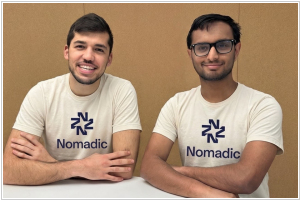
Nomadic helps companies developing self-driving cars, robots manipulating the physical environment, or autonomous construction equipment to analyse and organize collected video data for evaluation and training. Becuase the most valuable data depicts events that rarely occur and can befuddle inexperienced physical AI models, Nomadic has developed a platform that turns footage into a structured, searchable dataset through a collection of vision language models. That, in turn, allows for better fleet monitoring and the creation of unique datasets for reinforcement learning and faster iteration. Customers like Zoox, Mitsubishi Electric, Natix Network, and Zendar are already using the platform to develop intelligent machines.
Nomadic helps companies developing self-driving cars, robots manipulating the physical environment, or autonomous construction equipment to analyse and organize collected video data for evaluation and training. Becuase the most valuable data depicts events that rarely occur and can befuddle inexperienced physical AI models, Nomadic has developed a platform that turns footage into a structured, searchable dataset through a collection of vision language models. That, in turn, allows for better fleet monitoring and the creation of unique datasets for reinforcement learning and faster iteration. Customers like Zoox, Mitsubishi Electric, Natix Network, and Zendar are already using the platform to develop intelligent machines.
17

Funding: $6M
AgentMail provides an API-first email platform that enables AI agents to send, receive, and manage emails with automation and analytics.
AgentMail provides an API-first email platform that enables AI agents to send, receive, and manage emails with automation and analytics.
18

Funding: $5.8M
Luminal develops a compiler for optimizing machine learning models and provides cloud platform for running optimized models. Companies upload their Huggingface models and their weights to the Luminal cloud and receive a serverless endpoint (i.e., you simply send a request for example, an image, text, or audio to a special URL and receive the result). Luminal compiles models into GPU code with zero overhead. Optimization methods allow to squeeze more computing power out of existing infrastructure. The compiler, which sits between the written code and the GPU hardware, effectively competes with Nvidia's proprietary CUDA stack.
Luminal develops a compiler for optimizing machine learning models and provides cloud platform for running optimized models. Companies upload their Huggingface models and their weights to the Luminal cloud and receive a serverless endpoint (i.e., you simply send a request for example, an image, text, or audio to a special URL and receive the result). Luminal compiles models into GPU code with zero overhead. Optimization methods allow to squeeze more computing power out of existing infrastructure. The compiler, which sits between the written code and the GPU hardware, effectively competes with Nvidia's proprietary CUDA stack.
19
Funding: $3.5M
Modelence is a Software Development firm offering typeScript cloud services AI apps production.
Modelence is a Software Development firm offering typeScript cloud services AI apps production.
20

Funding: $189B
OpenAI develops generative AI models: GPT for language, DALLE for images and Codex for code. The company's main product is the chatbot ChatGPT, which is used as a personal smart assistant and in enterprise customer support and knowledge management systems via APIs. The company also conducts scientific research aimed at achieving artificial general intelligence. The company's initial goal was the security and openness of artificial intelligence, but it has gradually moved toward closing and commercializing its ML and NLP technologies. According to CEO Sam Altman, AGI is achieving a certain amount of revenue. The primary OpenAI's investor is Microsoft and it has strategic partnership with NVidia. OpenAI is also a primary AI provider for the US Department of War
OpenAI develops generative AI models: GPT for language, DALLE for images and Codex for code. The company's main product is the chatbot ChatGPT, which is used as a personal smart assistant and in enterprise customer support and knowledge management systems via APIs. The company also conducts scientific research aimed at achieving artificial general intelligence. The company's initial goal was the security and openness of artificial intelligence, but it has gradually moved toward closing and commercializing its ML and NLP technologies. According to CEO Sam Altman, AGI is achieving a certain amount of revenue. The primary OpenAI's investor is Microsoft and it has strategic partnership with NVidia. OpenAI is also a primary AI provider for the US Department of War
21

Funding: $1.2B
World Labs develops spatially intelligent AI world models that are capable of perceiving, generating, reasoning and interacting with 3D world, unlocking the full potential of AI. The company believes that spatial intelligence will unlock new forms of storytelling, creativity, design, modeling and immersive experiences in both virtual and physical worlds. Its first product, Marble - is based on best-in-class generative 3D world models and enables anyone to create spatially consistent, highly accurate and robust 3D worlds using just a single image, video or text prompt. World Labs' founders include AI pioneer Fei-Fei Li and other world-renowned experts in machine learning, generative AI and computer vision.
World Labs develops spatially intelligent AI world models that are capable of perceiving, generating, reasoning and interacting with 3D world, unlocking the full potential of AI. The company believes that spatial intelligence will unlock new forms of storytelling, creativity, design, modeling and immersive experiences in both virtual and physical worlds. Its first product, Marble - is based on best-in-class generative 3D world models and enables anyone to create spatially consistent, highly accurate and robust 3D worlds using just a single image, video or text prompt. World Labs' founders include AI pioneer Fei-Fei Li and other world-renowned experts in machine learning, generative AI and computer vision.
22

Funding: $1.1B
Physical Intelligence develops general-purpose ML models for robots and other physical devices. The company collects data from robots in its lab and from real-world robots in other locations - warehouses, shops, homes - and uses this data to train universal base robot models. The goal is to create a pre-trained model (similar to GPT). The idea is that if someone creates a new hardware platform, they won't have to start collecting data from scratch—they can transfer all the knowledge the model already has. The company already works with a small number of companies in various industries - logistics, grocery stores and chocolate makers. When researchers train a new model, it comes back to stations like these for evaluation.
Physical Intelligence develops general-purpose ML models for robots and other physical devices. The company collects data from robots in its lab and from real-world robots in other locations - warehouses, shops, homes - and uses this data to train universal base robot models. The goal is to create a pre-trained model (similar to GPT). The idea is that if someone creates a new hardware platform, they won't have to start collecting data from scratch—they can transfer all the knowledge the model already has. The company already works with a small number of companies in various industries - logistics, grocery stores and chocolate makers. When researchers train a new model, it comes back to stations like these for evaluation.
23

Funding: $775M
Harness is developing a platform for creating AI agents for the “after-code” phase of software development, which includes testing, security checks, verification and deployment - processes which consume nearly 70% of development cycle time. The startup aims to solve the problem of uncontrolled code risks caused by the use of AI for coding. The Harness platform is built on a software development knowledge graph that maps code changes, services, deployments, tests, environments, incidents, policies and costs. The company claims the knowledge graph gives the system a deep understanding of each client's software development processes and architecture.
Harness is developing a platform for creating AI agents for the “after-code” phase of software development, which includes testing, security checks, verification and deployment - processes which consume nearly 70% of development cycle time. The startup aims to solve the problem of uncontrolled code risks caused by the use of AI for coding. The Harness platform is built on a software development knowledge graph that maps code changes, services, deployments, tests, environments, incidents, policies and costs. The company claims the knowledge graph gives the system a deep understanding of each client's software development processes and architecture.
24

Funding: $481M
Decagon provides a conversational AI platform for automating customer support across multiple channels.
Decagon provides a conversational AI platform for automating customer support across multiple channels.
25

Funding: $472M
Replit allows to vibe code directly in mobile app - describe your app idea in simple terms and watch agent is turning into a working product. Whether it's a mobile game, a productivity tool, or a small digital store, the platform can generate the app and, what's more, help publish it to app stores. For example, if a stock trader tasks an agent with "creating an app tracking the 10 largest public companies by market capitalization" - Replit generates a mobile app with a working interface and allows him to preview and test the app. Replit has also integrated its platform with the Stripe payment processing system, allowing users to monetize their apps easily.
Replit allows to vibe code directly in mobile app - describe your app idea in simple terms and watch agent is turning into a working product. Whether it's a mobile game, a productivity tool, or a small digital store, the platform can generate the app and, what's more, help publish it to app stores. For example, if a stock trader tasks an agent with "creating an app tracking the 10 largest public companies by market capitalization" - Replit generates a mobile app with a working interface and allows him to preview and test the app. Replit has also integrated its platform with the Stripe payment processing system, allowing users to monetize their apps easily.
26

Funding: $255M
Fundamental develops AI models to extract useful insights from the massive volumes of structured data generated by large enterprises. It combines legacy predictive AI systems with more modern tools. Unlike traditional LLMs, Fundamental's large table model, called Nexus, is deterministic - meaning it produces the same answer every time it's asked a given question, and does not use the Transformer architecture. Because Transformer-based AI models can only process data within their context window, they often struggle to analyze extremely large datasets, for example, a spreadsheet with billions of rows. However, such huge structured datasets are common in large enterprises, creating significant opportunities for models capable of handling such scale.
Fundamental develops AI models to extract useful insights from the massive volumes of structured data generated by large enterprises. It combines legacy predictive AI systems with more modern tools. Unlike traditional LLMs, Fundamental's large table model, called Nexus, is deterministic - meaning it produces the same answer every time it's asked a given question, and does not use the Transformer architecture. Because Transformer-based AI models can only process data within their context window, they often struggle to analyze extremely large datasets, for example, a spreadsheet with billions of rows. However, such huge structured datasets are common in large enterprises, creating significant opportunities for models capable of handling such scale.
27

Funding: $250M
LMArena, a startup originally launched as a research project at the Berkeley University, tests and ranks the performance of AI models. The company evaluates various models across a range of tasks, including text processing, code generation, computer vision, text-to-image conversion and other tasks. Models tested include various versions of OpenAI GPT, Google Gemini, Anthropic Claude and Grok, as well as models focused on specialized areas such as image generation, text-to-image conversion and logical reasoning. The company has also created a commercial service, AI Evaluations, through which businesses can hire the company to conduct model evaluations.
LMArena, a startup originally launched as a research project at the Berkeley University, tests and ranks the performance of AI models. The company evaluates various models across a range of tasks, including text processing, code generation, computer vision, text-to-image conversion and other tasks. Models tested include various versions of OpenAI GPT, Google Gemini, Anthropic Claude and Grok, as well as models focused on specialized areas such as image generation, text-to-image conversion and logical reasoning. The company has also created a commercial service, AI Evaluations, through which businesses can hire the company to conduct model evaluations.
28

Funding: $138M
Higgsfield is developing a service that enables consumers, creators, and social media teams to create and edit AI-powered videos. According to the company, the product is primarily used by professional social media marketers, which is "a key sign that the platform's adoption has expanded beyond random content creation." Its users also share numerous projects focused on fashion and Hollywood-style storytelling. The startup's strategy is based not on direct competition with giants like OpenAI, but on integrating and adapting existing AI models to solve specific business problems. The platform specializes in creating marketing video content, maintaining consistency across characters and branding thanks to its proprietary "reasoning engine."
Higgsfield is developing a service that enables consumers, creators, and social media teams to create and edit AI-powered videos. According to the company, the product is primarily used by professional social media marketers, which is "a key sign that the platform's adoption has expanded beyond random content creation." Its users also share numerous projects focused on fashion and Hollywood-style storytelling. The startup's strategy is based not on direct competition with giants like OpenAI, but on integrating and adapting existing AI models to solve specific business problems. The platform specializes in creating marketing video content, maintaining consistency across characters and branding thanks to its proprietary "reasoning engine."
29

Funding: $46.1M
Artisan is creating an AI agent Ava that handles outbound direct marketing (cold contact) campaigns. It researches and contacts potential clients from dozens of sources, including email and professional social media. Ava automatically plans multi-channel sequences and contacts leads at the perfect moment, using intent signals to maximize conversion rates. One of its primary engagement channels, LinkedIn, temporarily blocked Artisan and forced the startup to remove all mentions of its social network from its website (however, it still allows data collection and messaging). Artisan is also developing agents to manage salespeople's schedules and qualify leads.
Artisan is creating an AI agent Ava that handles outbound direct marketing (cold contact) campaigns. It researches and contacts potential clients from dozens of sources, including email and professional social media. Ava automatically plans multi-channel sequences and contacts leads at the perfect moment, using intent signals to maximize conversion rates. One of its primary engagement channels, LinkedIn, temporarily blocked Artisan and forced the startup to remove all mentions of its social network from its website (however, it still allows data collection and messaging). Artisan is also developing agents to manage salespeople's schedules and qualify leads.
30

Funding: $29.5M
Arcee.ai develops small language models to automate workflows that improve efficiency and scalability in businesses.
Arcee.ai develops small language models to automate workflows that improve efficiency and scalability in businesses.

32

Funding: $15M
Kana's aim is to envision a future in which AI and marketers collaborate to provide each consumer with a flawless, customized experience.
Kana's aim is to envision a future in which AI and marketers collaborate to provide each consumer with a flawless, customized experience.
33

Funding: $8M
Memories.ai is using Nvidia AI tools to build the infrastructure for wearables and robotics to be able to remember and recall visual memories. Memories.ai uses Nvidia’s Cosmos-Reason 2, a reasoning vision language model, and Nvidia Metropolis, an application for video search and summarization to build the infrastructure needed to embed and index videos into a data format that can be stored and recalled, and capturing the data needed to train the model to do just that. The company created its own large visual memory model (LVMM) and LUCI, a hardware device worn by the company’s “data collectors” that records video used to train the model.
Memories.ai is using Nvidia AI tools to build the infrastructure for wearables and robotics to be able to remember and recall visual memories. Memories.ai uses Nvidia’s Cosmos-Reason 2, a reasoning vision language model, and Nvidia Metropolis, an application for video search and summarization to build the infrastructure needed to embed and index videos into a data format that can be stored and recalled, and capturing the data needed to train the model to do just that. The company created its own large visual memory model (LVMM) and LUCI, a hardware device worn by the company’s “data collectors” that records video used to train the model.
34

Funding: $3M
Trace is a workflow automation platform that routes tasks to the right agent – human or AI.
Trace is a workflow automation platform that routes tasks to the right agent – human or AI.
35

Funding: $2M
Empromptu is developing a platform for creating enterprise-ready AI applications. Users can create applications in a vibe coding mode, communicating their desired outcome to a chatbot. But unlike traditional vibe coding (which is more suited for quick experiments), Empromptu delivers a result that is (as stated) 98% production-ready (tested, SOC 2 compliant, documented and can be integrated into existing IT infrastructure via built-in LLMOps tools). Under the hood, the service automatically creates a set of AI Agents that solve project problems, following best practices for creating enterprise applications. The company targets enterprises that need to create AI applications in regulated industries, such as the hospitality.
Empromptu is developing a platform for creating enterprise-ready AI applications. Users can create applications in a vibe coding mode, communicating their desired outcome to a chatbot. But unlike traditional vibe coding (which is more suited for quick experiments), Empromptu delivers a result that is (as stated) 98% production-ready (tested, SOC 2 compliant, documented and can be integrated into existing IT infrastructure via built-in LLMOps tools). Under the hood, the service automatically creates a set of AI Agents that solve project problems, following best practices for creating enterprise applications. The company targets enterprises that need to create AI applications in regulated industries, such as the hospitality.
36
Funding: $25.8B
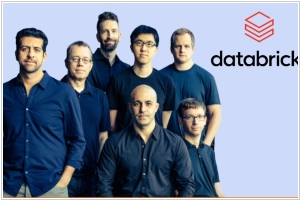
Databricks is developing cloud-based platform Databricks Data Intelligence for working with Big Data and machine learning. It brings together everything needed for the full data cycle: storage, processing, analysis, model creation, training and deployment. It includes MLflow - an open-source system for managing machine learning models, experiment tracking and automated deployment. The platform provides interactive notebooks (like Jupyter) for writing code in Python, SQL, R and Scala and running it on clusters. Databricks allows to develop your own models, AI agents and generative AI applications based on company's own data.
Databricks is developing cloud-based platform Databricks Data Intelligence for working with Big Data and machine learning. It brings together everything needed for the full data cycle: storage, processing, analysis, model creation, training and deployment. It includes MLflow - an open-source system for managing machine learning models, experiment tracking and automated deployment. The platform provides interactive notebooks (like Jupyter) for writing code in Python, SQL, R and Scala and running it on clusters. Databricks allows to develop your own models, AI agents and generative AI applications based on company's own data.
37

Funding: $15.9B
Scale AI is focused on data annotation for AI training and serves large tech companies like OpenAI, Google and Microsoft, which are developing large language models. It operates a distributed network of annotators and subcontractors via online platforms Remotasks and Outlier. The company also develops the "Scale Data Engine" platform for fine-tuning and reinforcement learning based on human feedback. Scale also has its own SEAL (Safety, Evaluations, Alignment Lab) research lab for evaluating and aligning AI models. At the exit it produces analytical reports on LLM performance, including quality metrics, safety and weaknesses. The company is 49% owned by Meta, that often raises concerns about independence, data leaks and client conflicts of interest.
Scale AI is focused on data annotation for AI training and serves large tech companies like OpenAI, Google and Microsoft, which are developing large language models. It operates a distributed network of annotators and subcontractors via online platforms Remotasks and Outlier. The company also develops the "Scale Data Engine" platform for fine-tuning and reinforcement learning based on human feedback. Scale also has its own SEAL (Safety, Evaluations, Alignment Lab) research lab for evaluating and aligning AI models. At the exit it produces analytical reports on LLM performance, including quality metrics, safety and weaknesses. The company is 49% owned by Meta, that often raises concerns about independence, data leaks and client conflicts of interest.
38

Funding: $2B
Thinking Machines Lab is a startup by OpenAI co-founder Mira Muratti. It develops so-called "interaction models," which the company describes as a fundamentally different type of AI interface. Instead of the step-by-step prompt-response dynamics that define most modern AI products, it processes continuous streams of audio, text, and video at 200-millisecond intervals. The idea is that they can capture the nuances of human communication - interruptions, mid-thought corrections, even pauses for reflection - in near real-time. For now, the startup maintains "a high level of security to prevent unauthorized use of its models."
Thinking Machines Lab is a startup by OpenAI co-founder Mira Muratti. It develops so-called "interaction models," which the company describes as a fundamentally different type of AI interface. Instead of the step-by-step prompt-response dynamics that define most modern AI products, it processes continuous streams of audio, text, and video at 200-millisecond intervals. The idea is that they can capture the nuances of human communication - interruptions, mid-thought corrections, even pauses for reflection - in near real-time. For now, the startup maintains "a high level of security to prevent unauthorized use of its models."
39
Funding: $1.5B
Freenome has developed blood test for colorectal cancer detection based on artificial intelligence. Freenome's technology combines computational biology, machine learning and various data types to detect the most subtle signs of cancer, even in the earliest stages. In addition to colon cancer, the company is developing a test for lung cancer detection. Acquired by Perceptive Capital Solutions
Freenome has developed blood test for colorectal cancer detection based on artificial intelligence. Freenome's technology combines computational biology, machine learning and various data types to detect the most subtle signs of cancer, even in the earliest stages. In addition to colon cancer, the company is developing a test for lung cancer detection. Acquired by Perceptive Capital Solutions
40
Funding: $1.5B
Perplexity is developing an AI-powered search engine that leverages third-party large language models but own Web-crawler, website index and ranking algorithm. Through a conversational interface, Perplexity allows users to ask clarifying questions and receive contextual answers. All responses are accompanied by links to online sources to ensure transparency and verifiability. The company is also developing its own browser, Comet Assistant, which can answer questions based on the context of a webpage and browsing history, as well as perform agent tasks on websites (such as registering, ordering booking tickets, ordering a taxi, etc.). The company also provides search API and an enterprise version for searching internal knowledge. Perplexity regularly becomes the target of lawsuits for unauthorized use of content.
Perplexity is developing an AI-powered search engine that leverages third-party large language models but own Web-crawler, website index and ranking algorithm. Through a conversational interface, Perplexity allows users to ask clarifying questions and receive contextual answers. All responses are accompanied by links to online sources to ensure transparency and verifiability. The company is also developing its own browser, Comet Assistant, which can answer questions based on the context of a webpage and browsing history, as well as perform agent tasks on websites (such as registering, ordering booking tickets, ordering a taxi, etc.). The company also provides search API and an enterprise version for searching internal knowledge. Perplexity regularly becomes the target of lawsuits for unauthorized use of content.
41

Funding: $1.4B
Figma is a collaborative interface design tool that enables the entire team’s design process to happen in one online tool. Allows to create designs in AI-dialog mode
Figma is a collaborative interface design tool that enables the entire team’s design process to happen in one online tool. Allows to create designs in AI-dialog mode
42

Funding: $1B
Harvey develops AI assistant for legal/knowledge workers. It allows professional service providers, and Fortune 500 companies delegate complex legal tasks in natural language. It's secure cloud service allows to upload, store and analyze thousands of documents to use it as a context. This data is enriched by 150 legal data sources across the globe. Lawyers can design and deploy multi-model agents tailored to firm’s expertise and deliver consistent, high-quality results at scale to enhance drafting and editing, email management and knowledge sharing in the Microsoft office tools. Harvey was one of OpenAI Startup Fund’s first investments, so it primary uses its API.
Harvey develops AI assistant for legal/knowledge workers. It allows professional service providers, and Fortune 500 companies delegate complex legal tasks in natural language. It's secure cloud service allows to upload, store and analyze thousands of documents to use it as a context. This data is enriched by 150 legal data sources across the globe. Lawyers can design and deploy multi-model agents tailored to firm’s expertise and deliver consistent, high-quality results at scale to enhance drafting and editing, email management and knowledge sharing in the Microsoft office tools. Harvey was one of OpenAI Startup Fund’s first investments, so it primary uses its API.

44

Funding: $626M
Poolside claims to be developing AGI for enterprise, but starting with software agents. Because (according to the founders) creating software requires understanding and creating a model of the world, as well as the ability to reason and plan. In other words, software development largely depends on human intelligence. Meanwhile, Poolside is developing code-generation model and agents for creating enterprise software. The main idea is to train the codeing model not only on code itself, but also on the enterprise's business data. Thus, the coding assistant provides suggestions or autocompletes code in the context of the given business (and not just in the context of programming practices). Poolside provides intelligence at every interface: through the terminal, API, agents and, of course, IDE. However, Poolside's philosophy is that software development should take place outside the editor. The company's clients are primarily Global 2000 companies and government agencies.
Poolside claims to be developing AGI for enterprise, but starting with software agents. Because (according to the founders) creating software requires understanding and creating a model of the world, as well as the ability to reason and plan. In other words, software development largely depends on human intelligence. Meanwhile, Poolside is developing code-generation model and agents for creating enterprise software. The main idea is to train the codeing model not only on code itself, but also on the enterprise's business data. Thus, the coding assistant provides suggestions or autocompletes code in the context of the given business (and not just in the context of programming practices). Poolside provides intelligence at every interface: through the terminal, API, agents and, of course, IDE. However, Poolside's philosophy is that software development should take place outside the editor. The company's clients are primarily Global 2000 companies and government agencies.
45

Funding: $599.1M
GrubMarket is an AI-powered prominent B2B eCommerce business operating in the American food supply chain industry.
GrubMarket is an AI-powered prominent B2B eCommerce business operating in the American food supply chain industry.
46

Funding: $583M
Gong.io has built a tool that uses natural language processing and machine learning to help train and suggest information to sales people and other customer service reps
Gong.io has built a tool that uses natural language processing and machine learning to help train and suggest information to sales people and other customer service reps
47

Funding: $534M
Abnormal Security is an email security company that protects enterprises and organizations from targeted email attacks.
Abnormal Security is an email security company that protects enterprises and organizations from targeted email attacks.
48

Funding: $526M
6sense is a B2B predictive intelligence engine for marketing and sales. It accelerates sales by finding buyers at every stage of the funnel.
6sense is a B2B predictive intelligence engine for marketing and sales. It accelerates sales by finding buyers at every stage of the funnel.
49
Funding: $481.8M
Flyr is a travel planning service that predicts air travel prices using machine learning technology.
Flyr is a travel planning service that predicts air travel prices using machine learning technology.
50

Funding: $475M
Unconventional AI aims to create a new, energy-efficient AI computer platform inspired by neuroscience. It develops silicon circuits that exhibit brain-like nonlinear dynamics to create a new foundation for intelligence. This means the startup will create hardware-isomorphism and run neural networks directly on physical objects, rather than simulating physical systems using software as is currently the case. This approach will enable capabilities significantly exceeding existing models while consuming only a fraction of the energy.
Unconventional AI aims to create a new, energy-efficient AI computer platform inspired by neuroscience. It develops silicon circuits that exhibit brain-like nonlinear dynamics to create a new foundation for intelligence. This means the startup will create hardware-isomorphism and run neural networks directly on physical objects, rather than simulating physical systems using software as is currently the case. This approach will enable capabilities significantly exceeding existing models while consuming only a fraction of the energy.