Top 14 Artificial General Intelligence (AGI) Startups in USA
1

Funding: $42.4B
xAI is Elon Musk's me-too startup, which couldn't resist the AI craze and invested heavily in the project. Initially, the company created the AI chatbot Grok for X/Twitter users, and later grew into a universal LLM provider for users and companies (via API). Grok's distinguishing feature is its more censorship-free worldview (which has occasionally led to controversy). Grok also initially focused on real-time context generation from online data (rather than pre-training). In addition to language, Grok can generate images. xAI also runs the world's largest supercomputer, Colossus and is engaged in AGI research (accoring to Elon Mask, xAI seeks to understand the true nature of the universe).
xAI is Elon Musk's me-too startup, which couldn't resist the AI craze and invested heavily in the project. Initially, the company created the AI chatbot Grok for X/Twitter users, and later grew into a universal LLM provider for users and companies (via API). Grok's distinguishing feature is its more censorship-free worldview (which has occasionally led to controversy). Grok also initially focused on real-time context generation from online data (rather than pre-training). In addition to language, Grok can generate images. xAI also runs the world's largest supercomputer, Colossus and is engaged in AGI research (accoring to Elon Mask, xAI seeks to understand the true nature of the universe).
2

Numenta is a startup by Jeff Hawkins, the author of renowned books on AI ("On Intelligence" and "A Thousand Brains: A New Theory of Intelligence") and his own theory of brain structure. Therefore, the startup's primary goal was initially to understand the neocortex (the primary cerebral cortex) and apply its principles to the creation of machine intelligence. The theory, called Hierarchical Temporal Memory (HTM) describes a learning and prediction model inspired by the cerebral cortex. The company has published open-source code of its framework (Thousand Brains Project) - a platform for sensory-motor learning. The company's main product, the Numenta Platform for Intelligent Computing (NuPIC), is also based on algorithms, data structures and architecture inspired by the brain.
3
Funding: $189B
OpenAI develops generative AI models: GPT for language, DALLE for images and Codex for code. The company's main product is the chatbot ChatGPT, which is used as a personal smart assistant and in enterprise customer support and knowledge management systems via APIs. The company also conducts scientific research aimed at achieving artificial general intelligence. The company's initial goal was the security and openness of artificial intelligence, but it has gradually moved toward closing and commercializing its ML and NLP technologies. According to CEO Sam Altman, AGI is achieving a certain amount of revenue. The primary OpenAI's investor is Microsoft and it has strategic partnership with NVidia. OpenAI is also a primary AI provider for the US Department of War
OpenAI develops generative AI models: GPT for language, DALLE for images and Codex for code. The company's main product is the chatbot ChatGPT, which is used as a personal smart assistant and in enterprise customer support and knowledge management systems via APIs. The company also conducts scientific research aimed at achieving artificial general intelligence. The company's initial goal was the security and openness of artificial intelligence, but it has gradually moved toward closing and commercializing its ML and NLP technologies. According to CEO Sam Altman, AGI is achieving a certain amount of revenue. The primary OpenAI's investor is Microsoft and it has strategic partnership with NVidia. OpenAI is also a primary AI provider for the US Department of War
4

Funding: $128.7B
Anthropic was founded by a group of former OpenAI employees who wanted to preserve the goal of AI safety. Anthropic is one of technology leaders in the AI market. Its core product is a family of LLM models under the Claude brand, which are used in the form of a chatbot and API for business. The strength of this model is quality code generation. The company promotes an approach called "Constitutional AI" according to which models are trained according to a set of principles, values, and rules (like Asimov's Laws of Robotics). In addition to selling commercial products, the company is actively researching the interpretability of AI models and AGI.
Anthropic was founded by a group of former OpenAI employees who wanted to preserve the goal of AI safety. Anthropic is one of technology leaders in the AI market. Its core product is a family of LLM models under the Claude brand, which are used in the form of a chatbot and API for business. The strength of this model is quality code generation. The company promotes an approach called "Constitutional AI" according to which models are trained according to a set of principles, values, and rules (like Asimov's Laws of Robotics). In addition to selling commercial products, the company is actively researching the interpretability of AI models and AGI.
5
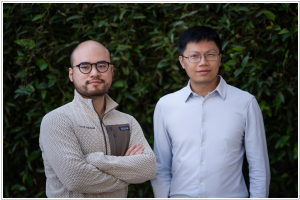
Funding: $40M
NeoCognition is a research lab developing general-purpose AI agents capable of self-learning and becoming experts in any field, similar to how humans learn. Their learning process is essentially the process of constructing a model of the world for any profession (any given microcosm). NeoCognition plans to sell its agent systems primarily to enterprises, including established SaaS companies, who can use them to create agent workers or improve existing products.
NeoCognition is a research lab developing general-purpose AI agents capable of self-learning and becoming experts in any field, similar to how humans learn. Their learning process is essentially the process of constructing a model of the world for any profession (any given microcosm). NeoCognition plans to sell its agent systems primarily to enterprises, including established SaaS companies, who can use them to create agent workers or improve existing products.
6
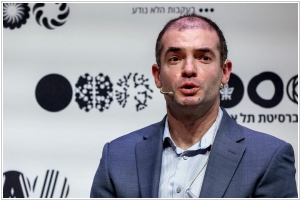
Funding: $3B
Safe Superintelligence is a startup by OpenAI co-founder (and CTO) Ilya Sutskever, which aims (as its name suggests) to create safe AGI. The startup doesn't declare any commercial goals, on the contrary, it claims that its single focus eliminates the distraction of management costs or product development cycles and its business model assumes that safety, reliability and progress are not dependent on short-term commercial requirements. Ilya plans to solve the problem of strong AI safety through revolutionary engineering and scientific breakthroughs. This means the startup likely wants to create strong AI and keep it in secret until it develops security measures for it.
Safe Superintelligence is a startup by OpenAI co-founder (and CTO) Ilya Sutskever, which aims (as its name suggests) to create safe AGI. The startup doesn't declare any commercial goals, on the contrary, it claims that its single focus eliminates the distraction of management costs or product development cycles and its business model assumes that safety, reliability and progress are not dependent on short-term commercial requirements. Ilya plans to solve the problem of strong AI safety through revolutionary engineering and scientific breakthroughs. This means the startup likely wants to create strong AI and keep it in secret until it develops security measures for it.
7

Funding: $2B
Figure creates humanoid robots with artificial intelligence. Figure is designed for home use - it performs household tasks such as laundry, cleaning and washing dishes completely autonomously. It uses Helix - an AI engine that allows it to navigate the unpredictable, ever-changing home environment. Helix is a universal humanoid vision-language-action model that learns and improves over time, acquiring new skills. Helix controls the entire cycle: perception, movement and reasoning, both onboard and in real time (making it an AGI contender). This allows Figure 03 to independently think and complete tasks without following a script. Figure has an optimized design with high arm dexterity and a look suitable for everyday life.
Figure creates humanoid robots with artificial intelligence. Figure is designed for home use - it performs household tasks such as laundry, cleaning and washing dishes completely autonomously. It uses Helix - an AI engine that allows it to navigate the unpredictable, ever-changing home environment. Helix is a universal humanoid vision-language-action model that learns and improves over time, acquiring new skills. Helix controls the entire cycle: perception, movement and reasoning, both onboard and in real time (making it an AGI contender). This allows Figure 03 to independently think and complete tasks without following a script. Figure has an optimized design with high arm dexterity and a look suitable for everyday life.
8

Funding: $2B
Thinking Machines Lab is a startup by OpenAI co-founder Mira Muratti. It develops so-called "interaction models," which the company describes as a fundamentally different type of AI interface. Instead of the step-by-step prompt-response dynamics that define most modern AI products, it processes continuous streams of audio, text, and video at 200-millisecond intervals. The idea is that they can capture the nuances of human communication - interruptions, mid-thought corrections, even pauses for reflection - in near real-time. For now, the startup maintains "a high level of security to prevent unauthorized use of its models."
Thinking Machines Lab is a startup by OpenAI co-founder Mira Muratti. It develops so-called "interaction models," which the company describes as a fundamentally different type of AI interface. Instead of the step-by-step prompt-response dynamics that define most modern AI products, it processes continuous streams of audio, text, and video at 200-millisecond intervals. The idea is that they can capture the nuances of human communication - interruptions, mid-thought corrections, even pauses for reflection - in near real-time. For now, the startup maintains "a high level of security to prevent unauthorized use of its models."
9

Funding: $1.8B
Skild AI is developing a general-purpose physics model for robots that can be adapted to any hardware and task. Skild's brain contains a world model (making it an approach to AGI), runs on an edge platform and enables robots to perform low-level skills such as grasping, transferring and navigating in unstructured environments. Developers can create their own AI algorithms and applications on the Skild platform using an API. The company is also developing its own universal humanoid robot model. The startup has strategic partnerships with LG CNS and Hewlett Packard Enterprise to develop its ecosystem.
Skild AI is developing a general-purpose physics model for robots that can be adapted to any hardware and task. Skild's brain contains a world model (making it an approach to AGI), runs on an edge platform and enables robots to perform low-level skills such as grasping, transferring and navigating in unstructured environments. Developers can create their own AI algorithms and applications on the Skild platform using an API. The company is also developing its own universal humanoid robot model. The startup has strategic partnerships with LG CNS and Hewlett Packard Enterprise to develop its ecosystem.
10
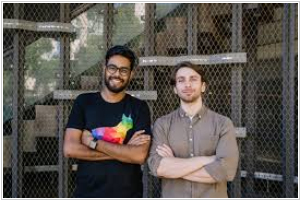
Funding: $1.1B
Luma AI is an advanced generative platform for creating high-quality videos. The company's flagship Ray3 model is designed specifically for storytelling. The company claims it can think and reason visually, taking into account physical laws and scene coherence. Its Draft Mode enables rapid exploration of new ideas. Ray3 delivers incredible realism, image-to-video conversion, keyframing and editing controls. Content generation is available through a web interface and a mobile app. Companies can use the Luma API to access advanced image and video generation features with an easy-to-use endpoint. The company also enables the generation of 3D models from simple text or photographs. Luma AI conducts fundamental research into multimodal general-purpose intelligence (AGI).
Luma AI is an advanced generative platform for creating high-quality videos. The company's flagship Ray3 model is designed specifically for storytelling. The company claims it can think and reason visually, taking into account physical laws and scene coherence. Its Draft Mode enables rapid exploration of new ideas. Ray3 delivers incredible realism, image-to-video conversion, keyframing and editing controls. Content generation is available through a web interface and a mobile app. Companies can use the Luma API to access advanced image and video generation features with an easy-to-use endpoint. The company also enables the generation of 3D models from simple text or photographs. Luma AI conducts fundamental research into multimodal general-purpose intelligence (AGI).
11

Funding: $626M
Poolside claims to be developing AGI for enterprise, but starting with software agents. Because (according to the founders) creating software requires understanding and creating a model of the world, as well as the ability to reason and plan. In other words, software development largely depends on human intelligence. Meanwhile, Poolside is developing code-generation model and agents for creating enterprise software. The main idea is to train the codeing model not only on code itself, but also on the enterprise's business data. Thus, the coding assistant provides suggestions or autocompletes code in the context of the given business (and not just in the context of programming practices). Poolside provides intelligence at every interface: through the terminal, API, agents and, of course, IDE. However, Poolside's philosophy is that software development should take place outside the editor. The company's clients are primarily Global 2000 companies and government agencies.
Poolside claims to be developing AGI for enterprise, but starting with software agents. Because (according to the founders) creating software requires understanding and creating a model of the world, as well as the ability to reason and plan. In other words, software development largely depends on human intelligence. Meanwhile, Poolside is developing code-generation model and agents for creating enterprise software. The main idea is to train the codeing model not only on code itself, but also on the enterprise's business data. Thus, the coding assistant provides suggestions or autocompletes code in the context of the given business (and not just in the context of programming practices). Poolside provides intelligence at every interface: through the terminal, API, agents and, of course, IDE. However, Poolside's philosophy is that software development should take place outside the editor. The company's clients are primarily Global 2000 companies and government agencies.
12

Funding: $7.5M
Skylark creates AI for physical applications, aiming to create a superintelligence that can learn and act in the real world. Its AI (similar to the human brain) features internal confidence indicator, novelty mode, short-term and long-term memory. It also enables creating a data-sharing network between physical agents to accelerate shared learning. The company is developing the KEPLER edge platform for collecting data from optical, thermal, radar and unmanned sensors and rapidly recognizing threats, providing improved situational awareness for military operations. Its second platform, TURING, is designed for intelligence agencies. It can analyze data from linguistic and visual sources to recognize information threats. Skylark also produces compact industrial computing units for edge computing, which process data flows from sensors without using cloud computing.
Skylark creates AI for physical applications, aiming to create a superintelligence that can learn and act in the real world. Its AI (similar to the human brain) features internal confidence indicator, novelty mode, short-term and long-term memory. It also enables creating a data-sharing network between physical agents to accelerate shared learning. The company is developing the KEPLER edge platform for collecting data from optical, thermal, radar and unmanned sensors and rapidly recognizing threats, providing improved situational awareness for military operations. Its second platform, TURING, is designed for intelligence agencies. It can analyze data from linguistic and visual sources to recognize information threats. Skylark also produces compact industrial computing units for edge computing, which process data flows from sensors without using cloud computing.
13

Primoria AI is building emotionally intelligent, adaptive AGI systems designed to evolve alongside users. Unlike traditional LLM tools, Primoria focuses on human-machine synergy, emotional context, and self-improving intelligence — shaping the next evolution of artificial intelligence.
14

This company is called AGI and claims to be "building useful AGI for everyday life." But in reality, it's creating an agent called AGI-0, which performs tasks on your computer and smartphone (for example, it can make restaurant reservations, book hotels, schedule meetings, etc.). Of course, it's not AGI, but rather an add-on to existing LLMs. However, it can run on any platform - use apps on Windows, Linux, Mac, Android, fulfill tasks in web browser. The company also offers a paid API for creating custom agents, which, in particular simplifies enables secure payment processing for e-commerce. The company does conduct some research in areas such as reinforcement learning, multi-agent systems and natural language understanding, but with the sole practical goal of improving the agent.
★
See also: