1
Country: Canada | Funding: $1B
Waabi develops autonomous driving technologies for commercial self-driving trucks. Waabi's autonomous driving system is trained, tested and validated using the Waabi Physical AI Platform - closed-loop simulator that automatically creates digital twins of the world based on data, simulates sensor operation in real time, creates scenarios for stress testing the Waabi driver and teaches the autonomous driving system to learn from its mistakes without human intervention. This allows the system to generalize and learn faster and from fewer examples than traditional autonomous driving systems. Waabi is collaborating with Volvo on the development of specialized autonomous trucks and with Uber Freight for truck rental.
Waabi develops autonomous driving technologies for commercial self-driving trucks. Waabi's autonomous driving system is trained, tested and validated using the Waabi Physical AI Platform - closed-loop simulator that automatically creates digital twins of the world based on data, simulates sensor operation in real time, creates scenarios for stress testing the Waabi driver and teaches the autonomous driving system to learn from its mistakes without human intervention. This allows the system to generalize and learn faster and from fewer examples than traditional autonomous driving systems. Waabi is collaborating with Volvo on the development of specialized autonomous trucks and with Uber Freight for truck rental.
2

Country: Norway | Funding: $136.5M
1X is developing Neo - intelligent humanoid robot for home use that automates household chores and brings useful insight into every conversation. The company has created a proprietary artificial intelligence model that understands real-world dynamics and can help robots learn new information autonomously. It uses a combination of video and cues to imbue Neo robots with new abilities. The robot takes video data associated with specific cues and feeds it back into a model of the surrounding world. This model is then fed to a network of robots to give them a better understanding of the physical world and greater knowledge. This behavioral information can help 1X train these models to the point where robots can respond to cues they never did before.
1X is developing Neo - intelligent humanoid robot for home use that automates household chores and brings useful insight into every conversation. The company has created a proprietary artificial intelligence model that understands real-world dynamics and can help robots learn new information autonomously. It uses a combination of video and cues to imbue Neo robots with new abilities. The robot takes video data associated with specific cues and feeds it back into a model of the surrounding world. This model is then fed to a network of robots to give them a better understanding of the physical world and greater knowledge. This behavioral information can help 1X train these models to the point where robots can respond to cues they never did before.
3

Country: USA | Funding: $50M
RealSense develops and manufactures 3D computer vision cameras that enable humanoid robots to perceive the world similar to how humans use their eyes and depth perception. Its depth-camera supports Power over Ethernet and has built-in AI chip for image processing. The startup is an Intel spinoff and has a strategic partnership with NVIDIA (to create an AI robotic platform Jetson Thor Series). The company develops computer vision systems for robotics in various sectors, including healthcare, industrial automation and security. RealSense also partners with several companies to produce glasses for the blind, including Eyesynth.
RealSense develops and manufactures 3D computer vision cameras that enable humanoid robots to perceive the world similar to how humans use their eyes and depth perception. Its depth-camera supports Power over Ethernet and has built-in AI chip for image processing. The startup is an Intel spinoff and has a strategic partnership with NVIDIA (to create an AI robotic platform Jetson Thor Series). The company develops computer vision systems for robotics in various sectors, including healthcare, industrial automation and security. RealSense also partners with several companies to produce glasses for the blind, including Eyesynth.
4

Country: USA | Funding: $1.8B
Skild AI is developing a general-purpose physics model for robots that can be adapted to any hardware and task. Skild's brain contains a world model (making it an approach to AGI), runs on an edge platform and enables robots to perform low-level skills such as grasping, transferring and navigating in unstructured environments. Developers can create their own AI algorithms and applications on the Skild platform using an API. The company is also developing its own universal humanoid robot model. The startup has strategic partnerships with LG CNS and Hewlett Packard Enterprise to develop its ecosystem.
Skild AI is developing a general-purpose physics model for robots that can be adapted to any hardware and task. Skild's brain contains a world model (making it an approach to AGI), runs on an edge platform and enables robots to perform low-level skills such as grasping, transferring and navigating in unstructured environments. Developers can create their own AI algorithms and applications on the Skild platform using an API. The company is also developing its own universal humanoid robot model. The startup has strategic partnerships with LG CNS and Hewlett Packard Enterprise to develop its ecosystem.
5
Country: USA | Funding: $63M
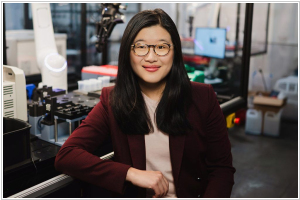
Medra AI is developing a robotic platform for scientific experiments - so-called "physical AI for scientists." The one-hand robot with multi-modal reasoning autonomously conducts laboratory experiments from start to finish. The company claims that it can use the same tools that scientists already use (meaning no need to purchase specialized lab equipment) and that researchers can instruct the robot via natural language prompts. The company also offers scientific AI that reads and interprets experimental results. In collaboration with pharmaceutical giant Genentech (which is also a major investor) Medra is developing new drugs
Medra AI is developing a robotic platform for scientific experiments - so-called "physical AI for scientists." The one-hand robot with multi-modal reasoning autonomously conducts laboratory experiments from start to finish. The company claims that it can use the same tools that scientists already use (meaning no need to purchase specialized lab equipment) and that researchers can instruct the robot via natural language prompts. The company also offers scientific AI that reads and interprets experimental results. In collaboration with pharmaceutical giant Genentech (which is also a major investor) Medra is developing new drugs
6

Country: USA | Funding: $7.5M
Skylark creates AI for physical applications, aiming to create a superintelligence that can learn and act in the real world. Its AI (similar to the human brain) features internal confidence indicator, novelty mode, short-term and long-term memory. It also enables creating a data-sharing network between physical agents to accelerate shared learning. The company is developing the KEPLER edge platform for collecting data from optical, thermal, radar and unmanned sensors and rapidly recognizing threats, providing improved situational awareness for military operations. Its second platform, TURING, is designed for intelligence agencies. It can analyze data from linguistic and visual sources to recognize information threats. Skylark also produces compact industrial computing units for edge computing, which process data flows from sensors without using cloud computing.
Skylark creates AI for physical applications, aiming to create a superintelligence that can learn and act in the real world. Its AI (similar to the human brain) features internal confidence indicator, novelty mode, short-term and long-term memory. It also enables creating a data-sharing network between physical agents to accelerate shared learning. The company is developing the KEPLER edge platform for collecting data from optical, thermal, radar and unmanned sensors and rapidly recognizing threats, providing improved situational awareness for military operations. Its second platform, TURING, is designed for intelligence agencies. It can analyze data from linguistic and visual sources to recognize information threats. Skylark also produces compact industrial computing units for edge computing, which process data flows from sensors without using cloud computing.
7

Country: USA | Funding: $300K
Endox develops physical-based articifial intelligence designed to perceive, adapt, and act in real time. Combining proprietary data acquisition technologies, next-generation robotics integration and edge-focused architectures, Endox creates systems scalable across various industries, including the US military.
Endox develops physical-based articifial intelligence designed to perceive, adapt, and act in real time. Combining proprietary data acquisition technologies, next-generation robotics integration and edge-focused architectures, Endox creates systems scalable across various industries, including the US military.