1

Country: Singapore | Funding: $585M
Manus makes AI products and agents similar to what companies like Cursor, Lovable, and Replit offer. It offers a chatbot and vibe-coding tools to let users build apps and websites, create designs and presentations, generate video, and more.
Manus makes AI products and agents similar to what companies like Cursor, Lovable, and Replit offer. It offers a chatbot and vibe-coding tools to let users build apps and websites, create designs and presentations, generate video, and more.
2

Country: USA | Funding: $85M
Hang Ten Systems is an enterprise software company that builds, modernizes, and operates custom software using an AI-native approach. Hang Ten says its edge lies not in building another AI model, but in adapting AI to the complex software development processes of large enterprises. The startup’s engineers rely on an in-house framework, Hobie, that packages reusable AI “skills” for regulated industries and complex enterprise software projects.
Hang Ten Systems is an enterprise software company that builds, modernizes, and operates custom software using an AI-native approach. Hang Ten says its edge lies not in building another AI model, but in adapting AI to the complex software development processes of large enterprises. The startup’s engineers rely on an in-house framework, Hobie, that packages reusable AI “skills” for regulated industries and complex enterprise software projects.
3

Country: Israel | Funding: $120M
Qodo enables quality-first AI code generation and generating meaningful tests for busy automatically using generative AI.
Qodo enables quality-first AI code generation and generating meaningful tests for busy automatically using generative AI.
4

Country: Sweden | Funding: $952.5M
Lovable develops a vibe coding platform that allows users to build websites and apps from text prompts, including the UI/frontend (often using the popular UX coding tool React) and database connectivity like Supabase. Chat mode helps you think through problems, debug errors, and plan your product directly within Lovable. Agent mode automates tasks such as editing code after reading project files or debugging. Lovable integrates shared connectors, personal connectors (MCP servers), and any API to add capabilities to deployed apps, provide context during app creation and securely call custom or third-party APIs. The service charges a per-use model: the more tasks requested from chat/agent, the more credits are deducted from the account. The company's clients include large software companies such as Klarna, Uber and Zendesk.
Lovable develops a vibe coding platform that allows users to build websites and apps from text prompts, including the UI/frontend (often using the popular UX coding tool React) and database connectivity like Supabase. Chat mode helps you think through problems, debug errors, and plan your product directly within Lovable. Agent mode automates tasks such as editing code after reading project files or debugging. Lovable integrates shared connectors, personal connectors (MCP servers), and any API to add capabilities to deployed apps, provide context during app creation and securely call custom or third-party APIs. The service charges a per-use model: the more tasks requested from chat/agent, the more credits are deducted from the account. The company's clients include large software companies such as Klarna, Uber and Zendesk.
5

Country: USA | Funding: $896M
Cognition AI develops Devin, the first AI-powered software engineer. Similar to GitHub's Copilot, Devin can help develop coding project plans, answer code questions with references and create wikis for code with documentation. Devin explores your codebase and helps clean up the backlog, modernize the codebase and supports the development of new projects. It performs unit and end-to-end testing, builds SaaS integrations, automates call response, ticket resolution and documentation generation. Devin is designed for collaboration and can adapt to unique workflows and learns your tribal knowledge. Devin also connects to MCP servers, from Asana to Zapier to automate the whole workflow. Devin Enterprise version is deployed in a virtual private cloud and provides enterprise-grade security and privacy.
Cognition AI develops Devin, the first AI-powered software engineer. Similar to GitHub's Copilot, Devin can help develop coding project plans, answer code questions with references and create wikis for code with documentation. Devin explores your codebase and helps clean up the backlog, modernize the codebase and supports the development of new projects. It performs unit and end-to-end testing, builds SaaS integrations, automates call response, ticket resolution and documentation generation. Devin is designed for collaboration and can adapt to unique workflows and learns your tribal knowledge. Devin also connects to MCP servers, from Asana to Zapier to automate the whole workflow. Devin Enterprise version is deployed in a virtual private cloud and provides enterprise-grade security and privacy.
6

Country: USA | Funding: $775M
Harness is developing a platform for creating AI agents for the “after-code” phase of software development, which includes testing, security checks, verification and deployment - processes which consume nearly 70% of development cycle time. The startup aims to solve the problem of uncontrolled code risks caused by the use of AI for coding. The Harness platform is built on a software development knowledge graph that maps code changes, services, deployments, tests, environments, incidents, policies and costs. The company claims the knowledge graph gives the system a deep understanding of each client's software development processes and architecture.
Harness is developing a platform for creating AI agents for the “after-code” phase of software development, which includes testing, security checks, verification and deployment - processes which consume nearly 70% of development cycle time. The startup aims to solve the problem of uncontrolled code risks caused by the use of AI for coding. The Harness platform is built on a software development knowledge graph that maps code changes, services, deployments, tests, environments, incidents, policies and costs. The company claims the knowledge graph gives the system a deep understanding of each client's software development processes and architecture.
7

Country: USA | Funding: $472M
Replit allows to vibe code directly in mobile app - describe your app idea in simple terms and watch agent is turning into a working product. Whether it's a mobile game, a productivity tool, or a small digital store, the platform can generate the app and, what's more, help publish it to app stores. For example, if a stock trader tasks an agent with "creating an app tracking the 10 largest public companies by market capitalization" - Replit generates a mobile app with a working interface and allows him to preview and test the app. Replit has also integrated its platform with the Stripe payment processing system, allowing users to monetize their apps easily.
Replit allows to vibe code directly in mobile app - describe your app idea in simple terms and watch agent is turning into a working product. Whether it's a mobile game, a productivity tool, or a small digital store, the platform can generate the app and, what's more, help publish it to app stores. For example, if a stock trader tasks an agent with "creating an app tracking the 10 largest public companies by market capitalization" - Replit generates a mobile app with a working interface and allows him to preview and test the app. Replit has also integrated its platform with the Stripe payment processing system, allowing users to monetize their apps easily.
8

Country: USA | Funding: $230.6M
CodeRabbit is an artificial intelligence company that offers detailed, line-by-line code suggestions and reviews within lines of code.
CodeRabbit is an artificial intelligence company that offers detailed, line-by-line code suggestions and reviews within lines of code.
9

Country: USA | Funding: $23.8M
Open Source Agents for Developers. Use AI to tackle the toil in your backlog, so you can focus on what matters: hard problems, creative challenges, and over-engineering your dotfiles
Open Source Agents for Developers. Use AI to tackle the toil in your backlog, so you can focus on what matters: hard problems, creative challenges, and over-engineering your dotfiles
10

Country: USA | Funding: $3.4B
Anysphere was the first company to create an AI-based IDE for software development - Cursor. Developers can use AI-powered auto-completion (for both individual strings and entire classes) and ask side-chat to create or fix a specific function, class or entire file (what later became known as vibe-coding). They can also create AI agents that independently perform simple coding tasks. Cursor relies on external AI models from companies including Google, OpenAI and Anthropic to power its platform, but plans to gradually implement its own model. Developers can use different LLMs for different tasks and pay only for Cursor (there's no need to purchase a subscription for each LLM). Acquired by SpaceX
Anysphere was the first company to create an AI-based IDE for software development - Cursor. Developers can use AI-powered auto-completion (for both individual strings and entire classes) and ask side-chat to create or fix a specific function, class or entire file (what later became known as vibe-coding). They can also create AI agents that independently perform simple coding tasks. Cursor relies on external AI models from companies including Google, OpenAI and Anthropic to power its platform, but plans to gradually implement its own model. Developers can use different LLMs for different tasks and pay only for Cursor (there's no need to purchase a subscription for each LLM). Acquired by SpaceX
11

Country: USA | Funding: $2.1B
Reflection AI, originally created as a coding agent platform, now positions itself as an open-source alternative to leading AI companies like OpenAI and Anthropic, and as a Western counterpart to Chinese AI companies like DeepSeek. It is building a large-scale LLM and reinforcement learning platform capable of training massive mixed-expert (MoE) models - the technology that has enabled DeepSeek to significantly reduce training and inference costs. Reflection AI will publish model weights -the fundamental parameters that determine an AI system's performance, for public use, while the datasets and all training processes will remain proprietary. The company aims to generate revenue from large enterprises building products based on Reflection AI models, and from governments developing "sovereign AI systems".
Reflection AI, originally created as a coding agent platform, now positions itself as an open-source alternative to leading AI companies like OpenAI and Anthropic, and as a Western counterpart to Chinese AI companies like DeepSeek. It is building a large-scale LLM and reinforcement learning platform capable of training massive mixed-expert (MoE) models - the technology that has enabled DeepSeek to significantly reduce training and inference costs. Reflection AI will publish model weights -the fundamental parameters that determine an AI system's performance, for public use, while the datasets and all training processes will remain proprietary. The company aims to generate revenue from large enterprises building products based on Reflection AI models, and from governments developing "sovereign AI systems".
12

Country: USA | Funding: $896M
Cognition, the startup behind Devin - popular AI programming agent and of (acquired) AI-powered integrated development environment Windsurf. It was one of the first AI startups to launch a full-fledged AI programming agent, which not only assisted with tasks but promised to fully automate them. However, early reviews showed that Devin was prone to errors, perhaps indicating that the AI agent technology was ahead of its time. However, the agent gradually became reliable enough even for enterprise development teams. The company has hundreds of enterprise clients, including Microsoft, NVidia, JP Morgan, and Goldman Sachs. Devin can clear backlog, modernize codebase and assist with new projects. It's built for collaboration, integrates with GitHab and can be trained to fit company's unique workflow. It also connects to MCP servers, from Asana to Zapier.
Cognition, the startup behind Devin - popular AI programming agent and of (acquired) AI-powered integrated development environment Windsurf. It was one of the first AI startups to launch a full-fledged AI programming agent, which not only assisted with tasks but promised to fully automate them. However, early reviews showed that Devin was prone to errors, perhaps indicating that the AI agent technology was ahead of its time. However, the agent gradually became reliable enough even for enterprise development teams. The company has hundreds of enterprise clients, including Microsoft, NVidia, JP Morgan, and Goldman Sachs. Devin can clear backlog, modernize codebase and assist with new projects. It's built for collaboration, integrates with GitHab and can be trained to fit company's unique workflow. It also connects to MCP servers, from Asana to Zapier.
13

Country: USA | Funding: $626M
Poolside claims to be developing AGI for enterprise, but starting with software agents. Because (according to the founders) creating software requires understanding and creating a model of the world, as well as the ability to reason and plan. In other words, software development largely depends on human intelligence. Meanwhile, Poolside is developing code-generation model and agents for creating enterprise software. The main idea is to train the codeing model not only on code itself, but also on the enterprise's business data. Thus, the coding assistant provides suggestions or autocompletes code in the context of the given business (and not just in the context of programming practices). Poolside provides intelligence at every interface: through the terminal, API, agents and, of course, IDE. However, Poolside's philosophy is that software development should take place outside the editor. The company's clients are primarily Global 2000 companies and government agencies.
Poolside claims to be developing AGI for enterprise, but starting with software agents. Because (according to the founders) creating software requires understanding and creating a model of the world, as well as the ability to reason and plan. In other words, software development largely depends on human intelligence. Meanwhile, Poolside is developing code-generation model and agents for creating enterprise software. The main idea is to train the codeing model not only on code itself, but also on the enterprise's business data. Thus, the coding assistant provides suggestions or autocompletes code in the context of the given business (and not just in the context of programming practices). Poolside provides intelligence at every interface: through the terminal, API, agents and, of course, IDE. However, Poolside's philosophy is that software development should take place outside the editor. The company's clients are primarily Global 2000 companies and government agencies.
14

Country: USA | Funding: $465.1M
Magic develops advanced coding models for automated software development. It acts as a programmer's assistant, seeking to understand and continually learn more about the project's context and helps with writing, reviewing, debugging and planning code changes. Magic considers that its advantage over competitors like GitHub Copilot and Antrophic Code is its extremely long model context window (100 million tokens). That is why their model architecture is called a "long-term memory network" (LTM). Instead of relying on fuzzy memorization, our LTM (Long-Term Memory) models are trained to reason on up to 100M tokens of context given to them during inference. Magic partners with Google and NVidia to build "coding supercomputers" based on the Google Cloud Platform.
Magic develops advanced coding models for automated software development. It acts as a programmer's assistant, seeking to understand and continually learn more about the project's context and helps with writing, reviewing, debugging and planning code changes. Magic considers that its advantage over competitors like GitHub Copilot and Antrophic Code is its extremely long model context window (100 million tokens). That is why their model architecture is called a "long-term memory network" (LTM). Instead of relying on fuzzy memorization, our LTM (Long-Term Memory) models are trained to reason on up to 100M tokens of context given to them during inference. Magic partners with Google and NVidia to build "coding supercomputers" based on the Google Cloud Platform.
15

Country: USA | Funding: $252M
Augment creates an AI platform for developers that includes chat, AI agent and Next Edit (code completion tool). The company claims that their AI assistants better understand programmers' intent than GitHub Copilot for example. Augment's autonomous software agents can run in various IDEs and in the cloud. The agent has a Memories feature, which is automatically updated during development and persists between conversations to continuously improve code generation, solve problems faster and match developer's style and coding patterns. The model supports MCP link to GitHub, Jira, Confluence, Notion, Linear, Vercel and Cloudflare. Augment's models were trained on publicly available data, some of which may be copyrighted or have a restrictive license.
Augment creates an AI platform for developers that includes chat, AI agent and Next Edit (code completion tool). The company claims that their AI assistants better understand programmers' intent than GitHub Copilot for example. Augment's autonomous software agents can run in various IDEs and in the cloud. The agent has a Memories feature, which is automatically updated during development and persists between conversations to continuously improve code generation, solve problems faster and match developer's style and coding patterns. The model supports MCP link to GitHub, Jira, Confluence, Notion, Linear, Vercel and Cloudflare. Augment's models were trained on publicly available data, some of which may be copyrighted or have a restrictive license.
16

Country: USA | Funding: $243M
Codeium is making AI-powered programming platform that maximizes developer productivity. The creators say that, unlike competing AI coding systems that provide generic code snippets and require significant effort to integrate and secure into existing codebases, Codeium's model makes recommendations within the context of an application's entire codebase and can be installed on company's own server. It supports approximately 70 programming languages and integrates with a number of popular development environments, including Microsoft Visual Studio and JetBrains. Codeium also offers a generous free plan and this strategy works fine: the startup has over 1000 enterprise clients, including Anduril, Zillow and Dell. Codeium's model is trained on publicly available code samples, so the company takes steps to remove "unauthorized" licensed code (such as copyrighted code) from the datasets used to train its AI models.
Codeium is making AI-powered programming platform that maximizes developer productivity. The creators say that, unlike competing AI coding systems that provide generic code snippets and require significant effort to integrate and secure into existing codebases, Codeium's model makes recommendations within the context of an application's entire codebase and can be installed on company's own server. It supports approximately 70 programming languages and integrates with a number of popular development environments, including Microsoft Visual Studio and JetBrains. Codeium also offers a generous free plan and this strategy works fine: the startup has over 1000 enterprise clients, including Anduril, Zillow and Dell. Codeium's model is trained on publicly available code samples, so the company takes steps to remove "unauthorized" licensed code (such as copyrighted code) from the datasets used to train its AI models.
17

Country: USA | Funding: $232M
Imbue is building Sculptor - a UI for Claude Code, that coordinates coding agents (and as advertised makes AI coding reliable). It allows to spin up multiple agents in parallel and orchestrate their cooperation: for example one agent can kick off a refactor while another agent is building out a feature, or check a hunch while you’re debugging, all without breaking your flow. Every agent runs in its own container, so they can all execute code safely, and then Sculptor brings an agent’s work from its container into your local repo, keeping your git state synced so you can collaborate directly from IDE. You can test agent’s work in your dev environment and commit changes you like. Sculptor saves every agent session with its plans, chats, tool calls and code changes, so context is never lost, and progress is always preserved.
Imbue is building Sculptor - a UI for Claude Code, that coordinates coding agents (and as advertised makes AI coding reliable). It allows to spin up multiple agents in parallel and orchestrate their cooperation: for example one agent can kick off a refactor while another agent is building out a feature, or check a hunch while you’re debugging, all without breaking your flow. Every agent runs in its own container, so they can all execute code safely, and then Sculptor brings an agent’s work from its container into your local repo, keeping your git state synced so you can collaborate directly from IDE. You can test agent’s work in your dev environment and commit changes you like. Sculptor saves every agent session with its plans, chats, tool calls and code changes, so context is never lost, and progress is always preserved.
18

Country: Israel | Funding: $115M
Lightrun provides real-time application insights and dynamic instrumentation for developers.
Lightrun provides real-time application insights and dynamic instrumentation for developers.

20

Country: Israel | Funding: $57.1M
Tabnine is an AI coding assistant that accelerates and simplifies the software development process without sacrificing privacy and security.
Tabnine is an AI coding assistant that accelerates and simplifies the software development process without sacrificing privacy and security.
21

Country: Israel | Funding: $57.1M
TabNine is a startup that provides coders with an all-language autocomplete software. Acquired by Codota
TabNine is a startup that provides coders with an all-language autocomplete software. Acquired by Codota
22

Country: USA | Funding: $56M
Inception is building diffusion generative models for code and text. Diffusion models are mostly used to power image-based AI systems like Stable Diffusion, Midjourney, but Inception says that diffusion-based LLMs can be also much faster and efficient than auto-regression (GPT) models. Where auto-regression models have to execute operations one after another, diffusion models can process many operations simultaneously. Unlike GPT that work sequentially and predict word by word based on the context, diffusion models modify the overall structure of a response incrementally until it matches the desired result. They also have more flexibility in how they utilize hardware. Inception's Mercury model, designed for software development is already integrated into a number of development tools.
Inception is building diffusion generative models for code and text. Diffusion models are mostly used to power image-based AI systems like Stable Diffusion, Midjourney, but Inception says that diffusion-based LLMs can be also much faster and efficient than auto-regression (GPT) models. Where auto-regression models have to execute operations one after another, diffusion models can process many operations simultaneously. Unlike GPT that work sequentially and predict word by word based on the context, diffusion models modify the overall structure of a response incrementally until it matches the desired result. They also have more flexibility in how they utilize hardware. Inception's Mercury model, designed for software development is already integrated into a number of development tools.
23

Country: USA | Funding: $45M
Tonic mimics your production data to create safe, useful, de-identified data for QA, testing, and development.
Tonic mimics your production data to create safe, useful, de-identified data for QA, testing, and development.
24

Country: Israel | Funding: $41.8M
By emulating the human eye and brain, our AI-powered image comparison technology only reports differences that are perceptible to users and reliably ignore invisible rendering, size and position differences. Our algorithms can instantly validate entire application pages, detect layout issues, and process the most complex and dynamic pages. No calibration, training, tweaking or thresholding required on your part. It just works perfectly.
By emulating the human eye and brain, our AI-powered image comparison technology only reports differences that are perceptible to users and reliably ignore invisible rendering, size and position differences. Our algorithms can instantly validate entire application pages, detect layout issues, and process the most complex and dynamic pages. No calibration, training, tweaking or thresholding required on your part. It just works perfectly.
25

Country: USA | Funding: $30.4M
Greptile develops LLM-powered API that understands your codebase.
Greptile develops LLM-powered API that understands your codebase.
26
Country: Seed | Funding: $25.5M
Bodo.ai is a parallel compute platform for data workloads, is developing a compiler to make Python portable and efficient across multiple hardware platforms. Bodo does this via a compiler technology that automates the parallelization so that data and ML developers don’t have to use new libraries, APIs or rewrite Python into other programming languages or graphics processing unit code to achieve scalability.
Bodo.ai is a parallel compute platform for data workloads, is developing a compiler to make Python portable and efficient across multiple hardware platforms. Bodo does this via a compiler technology that automates the parallelization so that data and ML developers don’t have to use new libraries, APIs or rewrite Python into other programming languages or graphics processing unit code to achieve scalability.
27

Country: Japan | Funding: $26M
Autify is a software testing automation platform powered by AI.
Autify is a software testing automation platform powered by AI.
28

Country: USA | Funding: $21M
Kite uses machine learning to build what is essentially a very smart code-completion tool
Kite uses machine learning to build what is essentially a very smart code-completion tool
29

Country: UK | Funding: $20.5M
TurinTech applies cutting-edge research to optimise code for machine learning and other data-heavy workloads. Its evoML platform helps businesses speed up the end-to-end data science process from months to weeks, and optimise model efficiency for quicker inference speed, lower memory, and energy consumption.
TurinTech applies cutting-edge research to optimise code for machine learning and other data-heavy workloads. Its evoML platform helps businesses speed up the end-to-end data science process from months to weeks, and optimise model efficiency for quicker inference speed, lower memory, and energy consumption.
30

Country: USA | Funding: $19.5M
Anything is an AI app builder that offers a platform that converts prompts into fully functional mobile and web applications.
Anything is an AI app builder that offers a platform that converts prompts into fully functional mobile and web applications.
31

Country: Denmark | Funding: $18.6M
Uizard is a computer software company developing AI tools to transform user interface images into code for building apps and websites.
Uizard is a computer software company developing AI tools to transform user interface images into code for building apps and websites.
32

Country: USA | Funding: $17.6M
Test.ai is the pioneer in AI-powered user scenario testing for mobile and web apps. Test.ai lets software developers stop writing tedious test automation scripts, leading to shorter testing cycles and faster time to market.
Test.ai is the pioneer in AI-powered user scenario testing for mobile and web apps. Test.ai lets software developers stop writing tedious test automation scripts, leading to shorter testing cycles and faster time to market.
33

Country: USA | Funding: $16M
LevelOps's mission is to bring AI-driven excellence platform to the engineering discipline
LevelOps's mission is to bring AI-driven excellence platform to the engineering discipline
34

Country: USA | Funding: $15M
PlayerZero is an issue communication tool that puts user session data at the center of fixing web application bugs.
PlayerZero is an issue communication tool that puts user session data at the center of fixing web application bugs.
35
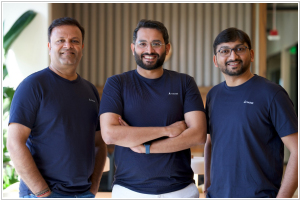
Country: India | Funding: $15M
Rocket is reimagining how the world builds software. While others make you prompt for every page and feature, Rocket's different. Describe your vision once and get full functional app with backend, integrations, production-ready code- everything.
Rocket is reimagining how the world builds software. While others make you prompt for every page and feature, Rocket's different. Describe your vision once and get full functional app with backend, integrations, production-ready code- everything.
36

Country: USA | Funding: $13.8M
Supermaven is an AI coding environment with several quality-of-life and technical enhancements.
Supermaven is an AI coding environment with several quality-of-life and technical enhancements.
37

Country: USA | Funding: $7M
Adaptive is a startup that enables non‑coders to create software that personalizes computing with AI.
Adaptive is a startup that enables non‑coders to create software that personalizes computing with AI.
38

Country: UK | Funding: $6M
Shuttle takes code produced by a vibe-coding system and assess the best way to deploy it, presenting the user with a sensible infrastructure package along with a price tag. Once the user agrees, Shuttle can arrange payment and deploy the software directly to the cloud provider with minimal friction.
Shuttle takes code produced by a vibe-coding system and assess the best way to deploy it, presenting the user with a sensible infrastructure package along with a price tag. Once the user agrees, Shuttle can arrange payment and deploy the software directly to the cloud provider with minimal friction.
39

Country: Switzerland | Funding: $5.2M
DeepCode automatically learns from millions of available software programs and uses this knowledge to make key suggestions on how to improve your code. Acquired by Snyk
DeepCode automatically learns from millions of available software programs and uses this knowledge to make key suggestions on how to improve your code. Acquired by Snyk
40
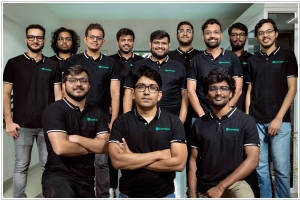
Country: India | Funding: $4.5M
Kombai is a firm that uses artificial intelligence to help front-end developers efficiently translate UI designs to code.
Kombai is a firm that uses artificial intelligence to help front-end developers efficiently translate UI designs to code.
41

Country: USA | Funding: $2.1M
Serenade is a platform that enables to help write, refactor, and navigate code with voice. Its AI engine translates what you say into syntactically correct code.
Serenade is a platform that enables to help write, refactor, and navigate code with voice. Its AI engine translates what you say into syntactically correct code.
42

Country: Ukraine | Funding: $152.2K
Metatable.ai is an AI-powered development platform that aims to simplify and accelerate software development by using AI.
Metatable.ai is an AI-powered development platform that aims to simplify and accelerate software development by using AI.
43

Country: UK | Funding: $8K
Genysys Engine is an AI Tech startup focusing on removing the barriers between humans and software development. We utilise Generative AI to generate web-based components from natural language descriptions and competitor data. We are applying this technology to create customer-focused websites, but theoretically, this technology can generate any web-based element.
Genysys Engine is an AI Tech startup focusing on removing the barriers between humans and software development. We utilise Generative AI to generate web-based components from natural language descriptions and competitor data. We are applying this technology to create customer-focused websites, but theoretically, this technology can generate any web-based element.
44

Country: USA
Bayou is a system for generating API idioms – snippets of code that use APIs – in Java. Users can specify programming tasks within their code by issuing a query to Bayou about the kind of program that will likely solve the tasks. Bayou’s job is to use the user’s code and the query in order to generate the right program for the task.
Bayou is a system for generating API idioms – snippets of code that use APIs – in Java. Users can specify programming tasks within their code by issuing a query to Bayou about the kind of program that will likely solve the tasks. Bayou’s job is to use the user’s code and the query in order to generate the right program for the task.
45

Country: Germany
BugFlows is an MLaaS Startup enabling Large software enterprises to leverage the power of machine learning in resolving their software issues exponentially faster.
BugFlows is an MLaaS Startup enabling Large software enterprises to leverage the power of machine learning in resolving their software issues exponentially faster.