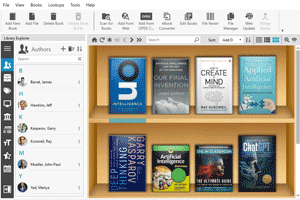
3 books on AI for Accounting [PDF]
Like
17
These books explore AI technologies that can help to automate accounting tasks, improve accuracy and reduce operational costs.
1. Generative Artificial Intelligence in Finance: Large Language Models to Transform Accounting and Finance Processes
2025 by Pethuru Raj Chelliah, Pushan Kumar Dutta, Abhishek Kumar, Ernesto D. R. Santibanez Gonzalez, Mohit Mittal, Sachin Kumar Gupta
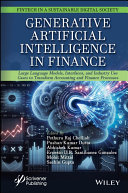
This is a collection of white papers from Indian financial market experts. For me it was particularly interesting to read about the use of AI in accounting. Accountants or accounting professionals often follow long-established methodologies and professional standards to analyze information and prepare reports. AI tools for accounting have emerged and are embedded in accounting software. AI-based software and systems are able to accurately automate accounting, tax and audit tasks and provide results to accountants who will use their professional judgment to review the produced information. The main point is that accounting loves precision, while artificial intelligence sometimes lies a little, so an accountant must carefully check all automated operations. It is especially dangerous that AI can make childish mistakes in mathematical calculations. Therefore, it is interesting how much easier it is to check the results of AI than to do everything manually. Unfortunately, the book does not provide a list or examples of accounting systems that are integrated with large language models.
Download PDF
2. AiCCOUNTANTS Accountants Augmented by Artificial Intelligence (AI)
2023 by Hitendra R. Patil
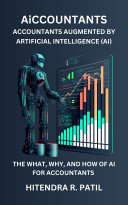
The author of this book invented the new term AiCCOUNTANTS - i.e. AI-assisted accounting (similar to AI-assisted programming, that is popular now). So, what tasks can an accountant assign to an AI/ML assistant? Firstly, it is an audit. Although AI cannot yet be relied upon to accurately reconcile accounts and receipts, by quickly analyzing a huge amount of data, AI can identify patterns and anomalies in company reporting, which helps to identify potential errors and fraud. AI can also help with tax calculations - having fully studied changes in legislation, it can identify possible tax benefits and deductions that an accountant may miss. Artificial intelligence can be well used to enter/digitize data, including data from paper/electronic invoices and receipts (this is probably the most time-consuming job for people). In addition, since an accountant's task is not only book-keeping, but also assisting the CEO with budgeting, they can use AI to forecast sales, incomes and expenses in the next reporting period. AI systems can handle this task by analyzing financial data of the previous history, identify patterns and trends and then create a budget based on these findings. Finally, another suitable task for AI is monitoring and fraud detection in current financial transactions. For example, AI can be used to identify unusual activity in online orders and credit card transactions
Download PDF
3. Artificial Intelligence in Accounting: Organisational and Ethical Implications
2022 by Othmar M. Lehner, Carina Knoll
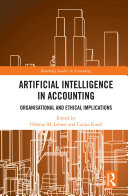
This book is about how AI is transforming accounting and audit. It is composed almost entirely of citations from various studies and expert publications. The book is divided into two parts. The first part is devoted to the practical benefits of AI. In particular, Chapter 3 discusses AI technologies that impact accounting and auditing. Chapter 4 focuses on the roles and tasks in this new area of work from the perspective of an individual specialists. Chapter 5 examines the important skills needed to succeed in the face of increasing accounting automation. Chapter 6 describes the potential risks and limitations of AI in accounting. Chapter 7 examines corporate governance mechanisms and structures to control the risks of using AI in accounting. The second part of the book is devoted to ethical aspects. Chapter 10 identifies the ethical challenges associated with the use of AI-based accounting systems for decision making. The objective of Chapter 11 is to critically evaluate the explicit and implicit value promises of “AI-driven accounting and auditing” from major industry players and consider how they align with current social, organizational and ethical values.
Download PDF
How to download PDF:
1. Install Gooreader
2. Enter Book ID to the search box and press Enter
3. Click "Download Book" icon and select PDF*
* - note that for yellow books only preview pages are downloaded
1. Generative Artificial Intelligence in Finance: Large Language Models to Transform Accounting and Finance Processes
2025 by Pethuru Raj Chelliah, Pushan Kumar Dutta, Abhishek Kumar, Ernesto D. R. Santibanez Gonzalez, Mohit Mittal, Sachin Kumar Gupta
This is a collection of white papers from Indian financial market experts. For me it was particularly interesting to read about the use of AI in accounting. Accountants or accounting professionals often follow long-established methodologies and professional standards to analyze information and prepare reports. AI tools for accounting have emerged and are embedded in accounting software. AI-based software and systems are able to accurately automate accounting, tax and audit tasks and provide results to accountants who will use their professional judgment to review the produced information. The main point is that accounting loves precision, while artificial intelligence sometimes lies a little, so an accountant must carefully check all automated operations. It is especially dangerous that AI can make childish mistakes in mathematical calculations. Therefore, it is interesting how much easier it is to check the results of AI than to do everything manually. Unfortunately, the book does not provide a list or examples of accounting systems that are integrated with large language models.
Download PDF
2. AiCCOUNTANTS Accountants Augmented by Artificial Intelligence (AI)
2023 by Hitendra R. Patil
The author of this book invented the new term AiCCOUNTANTS - i.e. AI-assisted accounting (similar to AI-assisted programming, that is popular now). So, what tasks can an accountant assign to an AI/ML assistant? Firstly, it is an audit. Although AI cannot yet be relied upon to accurately reconcile accounts and receipts, by quickly analyzing a huge amount of data, AI can identify patterns and anomalies in company reporting, which helps to identify potential errors and fraud. AI can also help with tax calculations - having fully studied changes in legislation, it can identify possible tax benefits and deductions that an accountant may miss. Artificial intelligence can be well used to enter/digitize data, including data from paper/electronic invoices and receipts (this is probably the most time-consuming job for people). In addition, since an accountant's task is not only book-keeping, but also assisting the CEO with budgeting, they can use AI to forecast sales, incomes and expenses in the next reporting period. AI systems can handle this task by analyzing financial data of the previous history, identify patterns and trends and then create a budget based on these findings. Finally, another suitable task for AI is monitoring and fraud detection in current financial transactions. For example, AI can be used to identify unusual activity in online orders and credit card transactions
Download PDF
3. Artificial Intelligence in Accounting: Organisational and Ethical Implications
2022 by Othmar M. Lehner, Carina Knoll
This book is about how AI is transforming accounting and audit. It is composed almost entirely of citations from various studies and expert publications. The book is divided into two parts. The first part is devoted to the practical benefits of AI. In particular, Chapter 3 discusses AI technologies that impact accounting and auditing. Chapter 4 focuses on the roles and tasks in this new area of work from the perspective of an individual specialists. Chapter 5 examines the important skills needed to succeed in the face of increasing accounting automation. Chapter 6 describes the potential risks and limitations of AI in accounting. Chapter 7 examines corporate governance mechanisms and structures to control the risks of using AI in accounting. The second part of the book is devoted to ethical aspects. Chapter 10 identifies the ethical challenges associated with the use of AI-based accounting systems for decision making. The objective of Chapter 11 is to critically evaluate the explicit and implicit value promises of “AI-driven accounting and auditing” from major industry players and consider how they align with current social, organizational and ethical values.
Download PDF
How to download PDF:
1. Install Gooreader
2. Enter Book ID to the search box and press Enter
3. Click "Download Book" icon and select PDF*
* - note that for yellow books only preview pages are downloaded