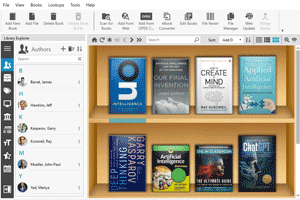
8 books on AI for SEO [PDF]
Like
26
SEO - search engine optimization - is arguably the field that has been most impacted by the advent of Artificial Intelligence (more preciously - of chatbots like ChatGPT). While everyone talked (and still talks) about AI replacing programmers, this is just a fantasy for those who don't understand programming. Meanwhile SEO specialists and webmasters - have already suffered for real and many have lost their jobs.
The problem is that people are now more likely to ask AI chatbots than to search for something in search engine. Perhaps this is a temporary phenomenon, until everyone encounters AI hallucination that will seriously impact them. Or perhaps people will come to terms with the fact that they will occasionally get into trouble because of AI lies. Anyway, website traffic has dropped by more than 50% as a result. Moreover, search engines, that also want to grab a piece of AI pie are inserting front-and-center AI Overviews into search results, which also reduces SEO traffic. Thus search engines are stealing content from websites, training their chatbots and selling it to end users.
But everything seemed so rosy when ChatGPT just appeared. SEO specialists were rubbing their hands in glee, thinking they now have an unlimited source of content. Moreover, search engines said (and still say) that they don't care how the content is produced, whether it's AI-generated or not, as long as it's high-quality and appealing to visitors. However, in practice, things turned out differently: unable to cope with the enormous amount of AI-generated content, search engines came to a simple and effective solution: anything generated by AI is SEO spam. And those sites that managed to post a significant amount of AI-generated content were successfully gone to sandbox filter, from which it's virtually impossible to recover.
This creates an interesting situation. SEO webmasters have less and less incentive to create web content because it's becoming increasingly difficult to attract visitors. Search engines and chatbots will steal this content and webmaster will receive nothing. And if webmasters don't create content, AI models won't gain new knowledge and the progress of our civilization will stop. We hope this won't happen and search engines will begin using AI not to replace traditional search, but to better understand search queries, evaluate content and intelligently rank websites/pages. So that if high-quality article is published, it will be immediately placed front-and-center in search results (regardless of whether the website is completely new). Then, in this rosy futures, SEO specialists will concentrate on discovering intents and creating high-quality content. AI can really improve this area, because search engines still often return results that are completely different from what we're looking for.
Here are some PDF books on using AI for SEO:
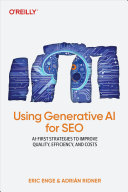
1. Using Generative AI for SEO: AI-First Strategies to Improve Quality, Efficiency, and Costs
2025 by
Download PDF
2. AI-Powered Marketing: The Future of Digital Advertising
2023 by Jim Stephens

This book is mainly about digital marketing, more specifically SEO marketing. The author was right to claim that AI would be a game changer in this field, but he painted a happy future where Google uses AI to rank websites better (rather than replace them with its AI answers). In particular, the book describes RankBrain algorithm, which helps Google deal with unusual queries that it has not seen before and works better than just associating search words with content in articles. RankBrain turns words in search queries into vectors and then tries to match the query with senses it knows. Thus, it understands what the user actually means and what they are looking for and returns results based on that. RankBrain also understands the relationships between words and how they work together. Previously, conjunctions like “the” or “and” were ignored by Google. Now Google understands how they change meaning and affect user intent. Like all machine learning algorithms, RankBrain tries to improve and adapt to user queries over time. It can see which links are clicked most often and understand when it’s working well and when it’s not. This way, it can quickly improve search results for specific keywords, which helps to weed out low-quality or spam content.
Download PDF
3. The Rise of AI Income: Using Artificial Intelligence for Financial Success
2023 by Sergio Rijo
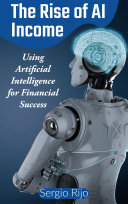
This book states that AI can be leveraged to optimize various aspects of social media marketing for increased effectiveness. Real-world case studies illustrate how AI enables quality content creation and enhances customer service operations. Besides, you'll know that AI-tools can improve decision-making processes in finance and investments while in healthcare they can improve patient care and medical services. The author is sure that staying updated with the latest AI developments is important nowadays.
Download PDF
4. Better SEO with AI: chatGPT for SEO
2023 by Will Power

Download PDF
5. Google’s AI Future and What It Means For SEO’S
2023 by Goncalo Paxe Jorge Miguel

Download PDF
6. AI-Powered Digital Marketing: Unleashing the power of AI for marketing success
2023 by Kabindra Kundu

This book, like Captain Obvious, talks about the basic tasks and technologies of digital marketing with some AI injections. In short, these injections are the following. AI helps to generate content, but it must be checked for accuracy, coherence and relevance and ALWAYS adjusted in accordance to your brand and style. You can use AI to analyze content for keywords, readability. Also, one chapter is dedicated to the creation of graphic content using Canva's AI tools. Perhaps the greatest value of AI is for personalization and customization of content in accordance with individual user preferences. AI algorithms can identify and fix technical problems, improve site performance and increase user experience. The book has an interesting example of evaluating the effectiveness of advertising campaign using ML-model written in Python and implemented in Jupyter Notebook. This example uses a simple linear regression to optimize advertising costs basing on historical data. Finally, determining the return on investment (ROI) of marketing campaigns can be also accomplished using an AI-powered attribution model - this solution is also given in the book.
Download PDF
7. Sales in The Age of Intelligent Web
2020 by Maria Johnsen

Download PDF
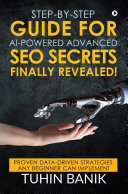
8. Step-By-Step Guide for AI-Powered Advanced SEO Secrets Finally Revealed!: Proven data-driven strategies any beginner can implement
2019 by Tuhin Banik
Download PDF
How to download PDF:
1. Install Gooreader
2. Enter Book ID to the search box and press Enter
3. Click "Download Book" icon and select PDF*
* - note that for yellow books only preview pages are downloaded
The problem is that people are now more likely to ask AI chatbots than to search for something in search engine. Perhaps this is a temporary phenomenon, until everyone encounters AI hallucination that will seriously impact them. Or perhaps people will come to terms with the fact that they will occasionally get into trouble because of AI lies. Anyway, website traffic has dropped by more than 50% as a result. Moreover, search engines, that also want to grab a piece of AI pie are inserting front-and-center AI Overviews into search results, which also reduces SEO traffic. Thus search engines are stealing content from websites, training their chatbots and selling it to end users.
But everything seemed so rosy when ChatGPT just appeared. SEO specialists were rubbing their hands in glee, thinking they now have an unlimited source of content. Moreover, search engines said (and still say) that they don't care how the content is produced, whether it's AI-generated or not, as long as it's high-quality and appealing to visitors. However, in practice, things turned out differently: unable to cope with the enormous amount of AI-generated content, search engines came to a simple and effective solution: anything generated by AI is SEO spam. And those sites that managed to post a significant amount of AI-generated content were successfully gone to sandbox filter, from which it's virtually impossible to recover.
This creates an interesting situation. SEO webmasters have less and less incentive to create web content because it's becoming increasingly difficult to attract visitors. Search engines and chatbots will steal this content and webmaster will receive nothing. And if webmasters don't create content, AI models won't gain new knowledge and the progress of our civilization will stop. We hope this won't happen and search engines will begin using AI not to replace traditional search, but to better understand search queries, evaluate content and intelligently rank websites/pages. So that if high-quality article is published, it will be immediately placed front-and-center in search results (regardless of whether the website is completely new). Then, in this rosy futures, SEO specialists will concentrate on discovering intents and creating high-quality content. AI can really improve this area, because search engines still often return results that are completely different from what we're looking for.
Here are some PDF books on using AI for SEO:
1. Using Generative AI for SEO: AI-First Strategies to Improve Quality, Efficiency, and Costs
2025 by
Download PDF
2. AI-Powered Marketing: The Future of Digital Advertising
2023 by Jim Stephens
This book is mainly about digital marketing, more specifically SEO marketing. The author was right to claim that AI would be a game changer in this field, but he painted a happy future where Google uses AI to rank websites better (rather than replace them with its AI answers). In particular, the book describes RankBrain algorithm, which helps Google deal with unusual queries that it has not seen before and works better than just associating search words with content in articles. RankBrain turns words in search queries into vectors and then tries to match the query with senses it knows. Thus, it understands what the user actually means and what they are looking for and returns results based on that. RankBrain also understands the relationships between words and how they work together. Previously, conjunctions like “the” or “and” were ignored by Google. Now Google understands how they change meaning and affect user intent. Like all machine learning algorithms, RankBrain tries to improve and adapt to user queries over time. It can see which links are clicked most often and understand when it’s working well and when it’s not. This way, it can quickly improve search results for specific keywords, which helps to weed out low-quality or spam content.
Download PDF
3. The Rise of AI Income: Using Artificial Intelligence for Financial Success
2023 by Sergio Rijo
This book states that AI can be leveraged to optimize various aspects of social media marketing for increased effectiveness. Real-world case studies illustrate how AI enables quality content creation and enhances customer service operations. Besides, you'll know that AI-tools can improve decision-making processes in finance and investments while in healthcare they can improve patient care and medical services. The author is sure that staying updated with the latest AI developments is important nowadays.
Download PDF
4. Better SEO with AI: chatGPT for SEO
2023 by Will Power
Download PDF
5. Google’s AI Future and What It Means For SEO’S
2023 by Goncalo Paxe Jorge Miguel
Download PDF
6. AI-Powered Digital Marketing: Unleashing the power of AI for marketing success
2023 by Kabindra Kundu
This book, like Captain Obvious, talks about the basic tasks and technologies of digital marketing with some AI injections. In short, these injections are the following. AI helps to generate content, but it must be checked for accuracy, coherence and relevance and ALWAYS adjusted in accordance to your brand and style. You can use AI to analyze content for keywords, readability. Also, one chapter is dedicated to the creation of graphic content using Canva's AI tools. Perhaps the greatest value of AI is for personalization and customization of content in accordance with individual user preferences. AI algorithms can identify and fix technical problems, improve site performance and increase user experience. The book has an interesting example of evaluating the effectiveness of advertising campaign using ML-model written in Python and implemented in Jupyter Notebook. This example uses a simple linear regression to optimize advertising costs basing on historical data. Finally, determining the return on investment (ROI) of marketing campaigns can be also accomplished using an AI-powered attribution model - this solution is also given in the book.
Download PDF
7. Sales in The Age of Intelligent Web
2020 by Maria Johnsen
Download PDF
8. Step-By-Step Guide for AI-Powered Advanced SEO Secrets Finally Revealed!: Proven data-driven strategies any beginner can implement
2019 by Tuhin Banik
Download PDF
How to download PDF:
1. Install Gooreader
2. Enter Book ID to the search box and press Enter
3. Click "Download Book" icon and select PDF*
* - note that for yellow books only preview pages are downloaded