1
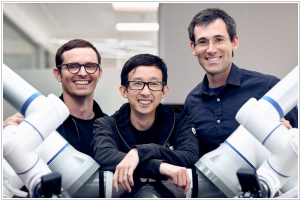
Country: USA | Funding: $753M
Generalist is developing an AI foundation model that can work with various robots. It claims its newly released Gen 1.5 model enables robots to master new tasks from video demonstrations as short as 3 to 12 seconds long. The startup is working with a handful of customers, using their feedback to tailor the model for specific use cases, according to one source.
Generalist is developing an AI foundation model that can work with various robots. It claims its newly released Gen 1.5 model enables robots to master new tasks from video demonstrations as short as 3 to 12 seconds long. The startup is working with a handful of customers, using their feedback to tailor the model for specific use cases, according to one source.
2

Country: Norway | Funding: $136.5M
1X is developing Neo - intelligent humanoid robot for home use that automates household chores and brings useful insight into every conversation. The company has created a proprietary artificial intelligence model that understands real-world dynamics and can help robots learn new information autonomously. It uses a combination of video and cues to imbue Neo robots with new abilities. The robot takes video data associated with specific cues and feeds it back into a model of the surrounding world. This model is then fed to a network of robots to give them a better understanding of the physical world and greater knowledge. This behavioral information can help 1X train these models to the point where robots can respond to cues they never did before.
1X is developing Neo - intelligent humanoid robot for home use that automates household chores and brings useful insight into every conversation. The company has created a proprietary artificial intelligence model that understands real-world dynamics and can help robots learn new information autonomously. It uses a combination of video and cues to imbue Neo robots with new abilities. The robot takes video data associated with specific cues and feeds it back into a model of the surrounding world. This model is then fed to a network of robots to give them a better understanding of the physical world and greater knowledge. This behavioral information can help 1X train these models to the point where robots can respond to cues they never did before.
3
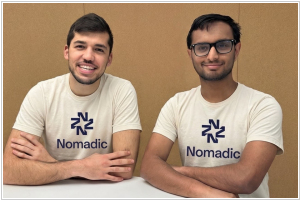
Country: USA | Funding: $8.4M
Nomadic helps companies developing self-driving cars, robots manipulating the physical environment, or autonomous construction equipment to analyse and organize collected video data for evaluation and training. Becuase the most valuable data depicts events that rarely occur and can befuddle inexperienced physical AI models, Nomadic has developed a platform that turns footage into a structured, searchable dataset through a collection of vision language models. That, in turn, allows for better fleet monitoring and the creation of unique datasets for reinforcement learning and faster iteration. Customers like Zoox, Mitsubishi Electric, Natix Network, and Zendar are already using the platform to develop intelligent machines.
Nomadic helps companies developing self-driving cars, robots manipulating the physical environment, or autonomous construction equipment to analyse and organize collected video data for evaluation and training. Becuase the most valuable data depicts events that rarely occur and can befuddle inexperienced physical AI models, Nomadic has developed a platform that turns footage into a structured, searchable dataset through a collection of vision language models. That, in turn, allows for better fleet monitoring and the creation of unique datasets for reinforcement learning and faster iteration. Customers like Zoox, Mitsubishi Electric, Natix Network, and Zendar are already using the platform to develop intelligent machines.
4
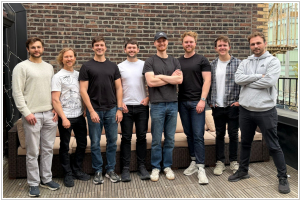
Country: USA | Funding: $12.8M
Antioch intends to be the Cursor for physical AI - it's building simulation tools for robot developers. Its platform allows robot builders to spin up multiple digital instances of their hardware and connect them to simulated sensors that mimic the same data the robot’s software would receive in the real world. These environments allow developers to test edge cases, perform reinforcement learning, or generate new training data. The company starts with models built by Nvidia, World Labs, and others, and builds domain-specific libraries to make them easy to use.
Antioch intends to be the Cursor for physical AI - it's building simulation tools for robot developers. Its platform allows robot builders to spin up multiple digital instances of their hardware and connect them to simulated sensors that mimic the same data the robot’s software would receive in the real world. These environments allow developers to test edge cases, perform reinforcement learning, or generate new training data. The company starts with models built by Nvidia, World Labs, and others, and builds domain-specific libraries to make them easy to use.
5

Country: USA | Funding: $1.8B
Skild AI is developing a general-purpose physics model for robots that can be adapted to any hardware and task. Skild's brain contains a world model (making it an approach to AGI), runs on an edge platform and enables robots to perform low-level skills such as grasping, transferring and navigating in unstructured environments. Developers can create their own AI algorithms and applications on the Skild platform using an API. The company is also developing its own universal humanoid robot model. The startup has strategic partnerships with LG CNS and Hewlett Packard Enterprise to develop its ecosystem.
Skild AI is developing a general-purpose physics model for robots that can be adapted to any hardware and task. Skild's brain contains a world model (making it an approach to AGI), runs on an edge platform and enables robots to perform low-level skills such as grasping, transferring and navigating in unstructured environments. Developers can create their own AI algorithms and applications on the Skild platform using an API. The company is also developing its own universal humanoid robot model. The startup has strategic partnerships with LG CNS and Hewlett Packard Enterprise to develop its ecosystem.
6

Country: USA | Funding: $1.1B
Physical Intelligence develops general-purpose ML models for robots and other physical devices. The company collects data from robots in its lab and from real-world robots in other locations - warehouses, shops, homes - and uses this data to train universal base robot models. The goal is to create a pre-trained model (similar to GPT). The idea is that if someone creates a new hardware platform, they won't have to start collecting data from scratch—they can transfer all the knowledge the model already has. The company already works with a small number of companies in various industries - logistics, grocery stores and chocolate makers. When researchers train a new model, it comes back to stations like these for evaluation.
Physical Intelligence develops general-purpose ML models for robots and other physical devices. The company collects data from robots in its lab and from real-world robots in other locations - warehouses, shops, homes - and uses this data to train universal base robot models. The goal is to create a pre-trained model (similar to GPT). The idea is that if someone creates a new hardware platform, they won't have to start collecting data from scratch—they can transfer all the knowledge the model already has. The company already works with a small number of companies in various industries - logistics, grocery stores and chocolate makers. When researchers train a new model, it comes back to stations like these for evaluation.
7
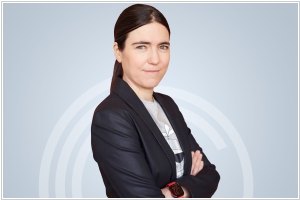
Country: Canada | Funding: $1B
Waabi develops autonomous driving technologies for commercial self-driving trucks. Waabi's autonomous driving system is trained, tested and validated using the Waabi Physical AI Platform - closed-loop simulator that automatically creates digital twins of the world based on data, simulates sensor operation in real time, creates scenarios for stress testing the Waabi driver and teaches the autonomous driving system to learn from its mistakes without human intervention. This allows the system to generalize and learn faster and from fewer examples than traditional autonomous driving systems. Waabi is collaborating with Volvo on the development of specialized autonomous trucks and with Uber Freight for truck rental.
Waabi develops autonomous driving technologies for commercial self-driving trucks. Waabi's autonomous driving system is trained, tested and validated using the Waabi Physical AI Platform - closed-loop simulator that automatically creates digital twins of the world based on data, simulates sensor operation in real time, creates scenarios for stress testing the Waabi driver and teaches the autonomous driving system to learn from its mistakes without human intervention. This allows the system to generalize and learn faster and from fewer examples than traditional autonomous driving systems. Waabi is collaborating with Volvo on the development of specialized autonomous trucks and with Uber Freight for truck rental.
8

Country: France | Funding: $1B
AGI startup by renowned AI scientist Yann LeCun who was formerly VP and Chief AI Scientist at Meta. AMI (Advanced Machine Intelligence) Labs is working on world model AI. It positions this model as an alternative to LLMs. The goal is to create AI that "understands" its environment (aka the world) so it can simulate cause-and-effect and what-if scenarios to predict outcomes. It’s the answer to LLMs’ structural error/hallucination problems.
AGI startup by renowned AI scientist Yann LeCun who was formerly VP and Chief AI Scientist at Meta. AMI (Advanced Machine Intelligence) Labs is working on world model AI. It positions this model as an alternative to LLMs. The goal is to create AI that "understands" its environment (aka the world) so it can simulate cause-and-effect and what-if scenarios to predict outcomes. It’s the answer to LLMs’ structural error/hallucination problems.
9

Country: USA | Funding: $154M
Ethernovia produces Ethernet-based processors that help collect data from sensors located throughout the system and quickly transmit it to a central computer. Thus, Ethernovia enables physical AI platforms to operate as integrated, real-time intelligent machines. Single-pair Ethernet PHY processors enable real-time sensor data aggregation and deterministic computing networks for AI. They support centralized and zonal architectures, as well as software-defined intelligent platforms.
Ethernovia produces Ethernet-based processors that help collect data from sensors located throughout the system and quickly transmit it to a central computer. Thus, Ethernovia enables physical AI platforms to operate as integrated, real-time intelligent machines. Single-pair Ethernet PHY processors enable real-time sensor data aggregation and deterministic computing networks for AI. They support centralized and zonal architectures, as well as software-defined intelligent platforms.
10
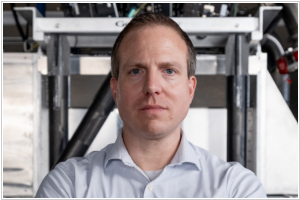
Country: USA | Funding: $126M
Freeform is AI-native manufacturing-as-a-service that uses laser equipment for high-precision metal parts 3D printing. Its system consists of production equipment, computing power, sensors, control systems, software, machine learning stack and physical AI model. The system learns, predicts and controls the metal forming process in real time. Freeform produces for example rocket engine parts and Formula 1 racing cars.
Freeform is AI-native manufacturing-as-a-service that uses laser equipment for high-precision metal parts 3D printing. Its system consists of production equipment, computing power, sensors, control systems, software, machine learning stack and physical AI model. The system learns, predicts and controls the metal forming process in real time. Freeform produces for example rocket engine parts and Formula 1 racing cars.
11
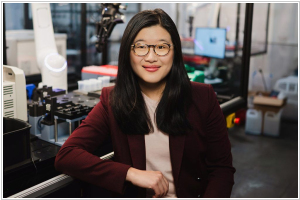
Country: USA | Funding: $63M
Medra AI is developing a robotic platform for scientific experiments - so-called "physical AI for scientists." The one-hand robot with multi-modal reasoning autonomously conducts laboratory experiments from start to finish. The company claims that it can use the same tools that scientists already use (meaning no need to purchase specialized lab equipment) and that researchers can instruct the robot via natural language prompts. The company also offers scientific AI that reads and interprets experimental results. In collaboration with pharmaceutical giant Genentech (which is also a major investor) Medra is developing new drugs
Medra AI is developing a robotic platform for scientific experiments - so-called "physical AI for scientists." The one-hand robot with multi-modal reasoning autonomously conducts laboratory experiments from start to finish. The company claims that it can use the same tools that scientists already use (meaning no need to purchase specialized lab equipment) and that researchers can instruct the robot via natural language prompts. The company also offers scientific AI that reads and interprets experimental results. In collaboration with pharmaceutical giant Genentech (which is also a major investor) Medra is developing new drugs
12

Country: USA | Funding: $50M
RealSense develops and manufactures 3D computer vision cameras that enable humanoid robots to perceive the world similar to how humans use their eyes and depth perception. Its depth-camera supports Power over Ethernet and has built-in AI chip for image processing. The startup is an Intel spinoff and has a strategic partnership with NVIDIA (to create an AI robotic platform Jetson Thor Series). The company develops computer vision systems for robotics in various sectors, including healthcare, industrial automation and security. RealSense also partners with several companies to produce glasses for the blind, including Eyesynth.
RealSense develops and manufactures 3D computer vision cameras that enable humanoid robots to perceive the world similar to how humans use their eyes and depth perception. Its depth-camera supports Power over Ethernet and has built-in AI chip for image processing. The startup is an Intel spinoff and has a strategic partnership with NVIDIA (to create an AI robotic platform Jetson Thor Series). The company develops computer vision systems for robotics in various sectors, including healthcare, industrial automation and security. RealSense also partners with several companies to produce glasses for the blind, including Eyesynth.
13

Country: Canada | Funding: $33.4M
ThinkLabs AI is building artificial intelligence models that simulate the behavior of the electric grid. The models can calculate things like interconnection of large loads, like data centers or electric vehicle charging and understand the impact they have on the grid. According to the company, its platform can compress a month-long grid study into under three minutes and run 10 million scenarios in 10 minutes, while maintaining greater than 99.7% accuracy on grid power flow calculations. ThinkLabs trains its AI on the outputs of first-principles physics simulators (the same tools utilities already trust) and then validates its models against those simulators.
ThinkLabs AI is building artificial intelligence models that simulate the behavior of the electric grid. The models can calculate things like interconnection of large loads, like data centers or electric vehicle charging and understand the impact they have on the grid. According to the company, its platform can compress a month-long grid study into under three minutes and run 10 million scenarios in 10 minutes, while maintaining greater than 99.7% accuracy on grid power flow calculations. ThinkLabs trains its AI on the outputs of first-principles physics simulators (the same tools utilities already trust) and then validates its models against those simulators.
14

Country: USA | Funding: $7.5M
Skylark creates AI for physical applications, aiming to create a superintelligence that can learn and act in the real world. Its AI (similar to the human brain) features internal confidence indicator, novelty mode, short-term and long-term memory. It also enables creating a data-sharing network between physical agents to accelerate shared learning. The company is developing the KEPLER edge platform for collecting data from optical, thermal, radar and unmanned sensors and rapidly recognizing threats, providing improved situational awareness for military operations. Its second platform, TURING, is designed for intelligence agencies. It can analyze data from linguistic and visual sources to recognize information threats. Skylark also produces compact industrial computing units for edge computing, which process data flows from sensors without using cloud computing.
Skylark creates AI for physical applications, aiming to create a superintelligence that can learn and act in the real world. Its AI (similar to the human brain) features internal confidence indicator, novelty mode, short-term and long-term memory. It also enables creating a data-sharing network between physical agents to accelerate shared learning. The company is developing the KEPLER edge platform for collecting data from optical, thermal, radar and unmanned sensors and rapidly recognizing threats, providing improved situational awareness for military operations. Its second platform, TURING, is designed for intelligence agencies. It can analyze data from linguistic and visual sources to recognize information threats. Skylark also produces compact industrial computing units for edge computing, which process data flows from sensors without using cloud computing.
15

Country: USA | Funding: $300K
Endox develops physical-based articifial intelligence designed to perceive, adapt, and act in real time. Combining proprietary data acquisition technologies, next-generation robotics integration and edge-focused architectures, Endox creates systems scalable across various industries, including the US military.
Endox develops physical-based articifial intelligence designed to perceive, adapt, and act in real time. Combining proprietary data acquisition technologies, next-generation robotics integration and edge-focused architectures, Endox creates systems scalable across various industries, including the US military.