1

Country: USA | Funding: $337M
Odyssey is an AI lab focused on creating universal world models, which the company calls new form of audiovisual intelligence. These models are to form the basis of the next generation of games, films, education content, training simulations and advertising. These models don't just generate video - they enable interaction with the 3D world i.e. creation of interactive videos. The company achieves this through a new multi-stage training pipeline that transforms the model into a causal behavioral video model that reacts to actions in real time and continuously responds to input. As you play the video, you shape it in real time using natural text prompts, similar to communicating with a language model.
Odyssey is an AI lab focused on creating universal world models, which the company calls new form of audiovisual intelligence. These models are to form the basis of the next generation of games, films, education content, training simulations and advertising. These models don't just generate video - they enable interaction with the 3D world i.e. creation of interactive videos. The company achieves this through a new multi-stage training pipeline that transforms the model into a causal behavioral video model that reacts to actions in real time and continuously responds to input. As you play the video, you shape it in real time using natural text prompts, similar to communicating with a language model.
2
Country: UK
DeepMind was acquired by Google as a leading ML startup and now acts as its mostly independent AI division. Its initial goal was to create strong artificial intelligence, which the developers hoped to achieve through the ability to play games (Atari, Go, chess, Dota) and control physical robots. DeepMind gradually took over all of Google's AI projects, including the LLM model and the Gemini chatbot. DeepMind was one of the first to develop multimodal intelligence, including language, code, images, video and 3D world generation. Furthermore, the startup continues projects of creating specialized machine learning systems for various industries, including medicine (drug development) and energy (energy optimization for Google's data centers).
DeepMind was acquired by Google as a leading ML startup and now acts as its mostly independent AI division. Its initial goal was to create strong artificial intelligence, which the developers hoped to achieve through the ability to play games (Atari, Go, chess, Dota) and control physical robots. DeepMind gradually took over all of Google's AI projects, including the LLM model and the Gemini chatbot. DeepMind was one of the first to develop multimodal intelligence, including language, code, images, video and 3D world generation. Furthermore, the startup continues projects of creating specialized machine learning systems for various industries, including medicine (drug development) and energy (energy optimization for Google's data centers).
3
Country: UK | Funding: $2.5B
Wayve is developing an end-to-end autonomous driving software Wayve AI Driver based on a proprietary AI model. This approach replaces the modular "sense-plan-act" architecture of the traditional AV1.0 approach with a single neural network trained on diverse data to transform raw sensor inputs into safe outputs. AV2.0 learns driving skills from raw, unlabeled data using self-training, eliminating the need for costly and time-consuming curation of labeled datasets. Wayve also uses generative models of the world for training, creating rich and realistic synthetic scenarios. Wayve's technology does not require HD maps, allowing it to be easily scaled to new roads and cities. Wayve AI Driver is sensor- and hardware-independent and compatible with any type of vehicle.
Wayve is developing an end-to-end autonomous driving software Wayve AI Driver based on a proprietary AI model. This approach replaces the modular "sense-plan-act" architecture of the traditional AV1.0 approach with a single neural network trained on diverse data to transform raw sensor inputs into safe outputs. AV2.0 learns driving skills from raw, unlabeled data using self-training, eliminating the need for costly and time-consuming curation of labeled datasets. Wayve also uses generative models of the world for training, creating rich and realistic synthetic scenarios. Wayve's technology does not require HD maps, allowing it to be easily scaled to new roads and cities. Wayve AI Driver is sensor- and hardware-independent and compatible with any type of vehicle.
4

Country: USA | Funding: $1.2B
World Labs develops spatially intelligent AI world models that are capable of perceiving, generating, reasoning and interacting with 3D world, unlocking the full potential of AI. The company believes that spatial intelligence will unlock new forms of storytelling, creativity, design, modeling and immersive experiences in both virtual and physical worlds. Its first product, Marble - is based on best-in-class generative 3D world models and enables anyone to create spatially consistent, highly accurate and robust 3D worlds using just a single image, video or text prompt. World Labs' founders include AI pioneer Fei-Fei Li and other world-renowned experts in machine learning, generative AI and computer vision.
World Labs develops spatially intelligent AI world models that are capable of perceiving, generating, reasoning and interacting with 3D world, unlocking the full potential of AI. The company believes that spatial intelligence will unlock new forms of storytelling, creativity, design, modeling and immersive experiences in both virtual and physical worlds. Its first product, Marble - is based on best-in-class generative 3D world models and enables anyone to create spatially consistent, highly accurate and robust 3D worlds using just a single image, video or text prompt. World Labs' founders include AI pioneer Fei-Fei Li and other world-renowned experts in machine learning, generative AI and computer vision.
5
Country: USA | Funding: $1.1B
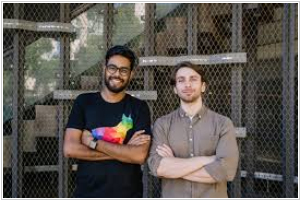
Luma AI is an advanced generative platform for creating high-quality videos. The company's flagship Ray3 model is designed specifically for storytelling. The company claims it can think and reason visually, taking into account physical laws and scene coherence. Its Draft Mode enables rapid exploration of new ideas. Ray3 delivers incredible realism, image-to-video conversion, keyframing and editing controls. Content generation is available through a web interface and a mobile app. Companies can use the Luma API to access advanced image and video generation features with an easy-to-use endpoint. The company also enables the generation of 3D models from simple text or photographs. Luma AI conducts fundamental research into multimodal general-purpose intelligence (AGI).
Luma AI is an advanced generative platform for creating high-quality videos. The company's flagship Ray3 model is designed specifically for storytelling. The company claims it can think and reason visually, taking into account physical laws and scene coherence. Its Draft Mode enables rapid exploration of new ideas. Ray3 delivers incredible realism, image-to-video conversion, keyframing and editing controls. Content generation is available through a web interface and a mobile app. Companies can use the Luma API to access advanced image and video generation features with an easy-to-use endpoint. The company also enables the generation of 3D models from simple text or photographs. Luma AI conducts fundamental research into multimodal general-purpose intelligence (AGI).
6

Country: France | Funding: $1B
AGI startup by renowned AI scientist Yann LeCun who was formerly VP and Chief AI Scientist at Meta. AMI (Advanced Machine Intelligence) Labs is working on world model AI. It positions this model as an alternative to LLMs. The goal is to create AI that "understands" its environment (aka the world) so it can simulate cause-and-effect and what-if scenarios to predict outcomes. It’s the answer to LLMs’ structural error/hallucination problems.
AGI startup by renowned AI scientist Yann LeCun who was formerly VP and Chief AI Scientist at Meta. AMI (Advanced Machine Intelligence) Labs is working on world model AI. It positions this model as an alternative to LLMs. The goal is to create AI that "understands" its environment (aka the world) so it can simulate cause-and-effect and what-if scenarios to predict outcomes. It’s the answer to LLMs’ structural error/hallucination problems.
7
Country: USA | Funding: $859.5M
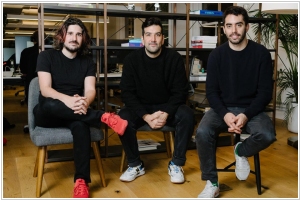
Runway is a service for generating artistic videos from text prompts or graphic templates (video-to-video, image-to-video). The company uses diffusion models, visual transformers, temporal consistency methods (to ensure character/environment consistency across scenes). The service also offers video editing tools: object removal, background and lighting changes, stylization, scene appearance management, cropping and more. It provides specialized tools 3d-room dressing, virtual outfit trying, video-to-animation, storyboard-to-animation. Runway is used by professional filmmakers, artists, YouTube content creators and marketers. The service provides an API for business and a mobile app for a general audience. Runway also develops own 3D-world model that works through frame-by-frame prediction, creating a simulation with an understanding of physics and how the world actually behaves over time
Runway is a service for generating artistic videos from text prompts or graphic templates (video-to-video, image-to-video). The company uses diffusion models, visual transformers, temporal consistency methods (to ensure character/environment consistency across scenes). The service also offers video editing tools: object removal, background and lighting changes, stylization, scene appearance management, cropping and more. It provides specialized tools 3d-room dressing, virtual outfit trying, video-to-animation, storyboard-to-animation. Runway is used by professional filmmakers, artists, YouTube content creators and marketers. The service provides an API for business and a mobile app for a general audience. Runway also develops own 3D-world model that works through frame-by-frame prediction, creating a simulation with an understanding of physics and how the world actually behaves over time
8

Country: USA | Funding: $133.7M
General Intuition is a spinoff of Medal, a platform for uploading and sharing videogame clips. The startup uses this vast collection of game videos to train and create base models and AI agents capable of understanding how objects and entities move through space and time. General Intuition's model is capable of understanding environments it hasn't been trained on and correctly predicts actions within them. It does this solely based on visual input: the agents see only what the human player sees and navigate space following the controller's directions. According to the company, this approach can be naturally transferred to physical systems such as robotic arms, drones and autonomous vehicles, which people often control with video game controllers.
General Intuition is a spinoff of Medal, a platform for uploading and sharing videogame clips. The startup uses this vast collection of game videos to train and create base models and AI agents capable of understanding how objects and entities move through space and time. General Intuition's model is capable of understanding environments it hasn't been trained on and correctly predicts actions within them. It does this solely based on visual input: the agents see only what the human player sees and navigate space following the controller's directions. According to the company, this approach can be naturally transferred to physical systems such as robotic arms, drones and autonomous vehicles, which people often control with video game controllers.
9

Country: USA | Funding: $25M
Spline offers collaborative 3D design platform that allows to create and manage 3D models and environments. It is a completely cloud-based and works in a browser (does not require hardware/software installation). It uses AI to create any 3D objects and 3D video scenes from text prompts and images. After generation, you can continue editing objects and scenes in the online Spline editor. An additional tool allows you to transfer 3D-model styles. The service allows to easily export AI content or embed into websites or mobile applications with the help of a code fragment. Spline offers a consumer (paid) chat for 3D generation as well as an enterprise version that meets all security and data privacy requirements
Spline offers collaborative 3D design platform that allows to create and manage 3D models and environments. It is a completely cloud-based and works in a browser (does not require hardware/software installation). It uses AI to create any 3D objects and 3D video scenes from text prompts and images. After generation, you can continue editing objects and scenes in the online Spline editor. An additional tool allows you to transfer 3D-model styles. The service allows to easily export AI content or embed into websites or mobile applications with the help of a code fragment. Spline offers a consumer (paid) chat for 3D generation as well as an enterprise version that meets all security and data privacy requirements
10

Country: UK | Funding: $13M
SpAItial is pioneering Spatial Foundation Models (SFMs), a groundbreaking AI paradigm designed to generate and reason about the appearance and physics of real and imagined environments
SpAItial is pioneering Spatial Foundation Models (SFMs), a groundbreaking AI paradigm designed to generate and reason about the appearance and physics of real and imagined environments
11

Country: Austria
Atlas empowers the next generation of content creators to build virtual worlds in a fraction of the time with cutting-edge generative 3D AI.
Atlas empowers the next generation of content creators to build virtual worlds in a fraction of the time with cutting-edge generative 3D AI.
12

Country: USA
Image to STL develops AI-Powered image to STL Converter that creates printable models in minutes. It also allows to create 3D-objects from text prompts. The service allows to export to STL, GLB, OBJ.
Image to STL develops AI-Powered image to STL Converter that creates printable models in minutes. It also allows to create 3D-objects from text prompts. The service allows to export to STL, GLB, OBJ.